Tips

Fire Doors and Architectural Ironmongery: Why the Hardware Specification Cannot Be Considered in Isolation
Fire doors are frequently discussed in terms of door leaves, frames, seals and fire-resistance periods. For architects and architectural ironmongers, however, there is another important part of the specification: the hardware attached to the door.
Handles, locks, latches, hinges, closers and associated components are not simply decorative additions to a fire-resisting door assembly. Their selection and installation can affect how the door operates in everyday use and how the complete assembly performs when required.
That makes fire-door ironmongery a coordination exercise rather than a shopping list.
Think about the doorset, not just the handle
One of the most useful principles when specifying hardware for a fire door is to stop thinking of individual products in isolation.
A fire-resisting door relies upon a combination of components working together. The door leaf, frame, glazing where present, seals, hinges, closer, latch or lock and other hardware all form part of the finished assembly.
A technically impressive piece of hardware does not automatically make it appropriate for every fire door.
The relevant evidence for the proposed doorset and application should therefore guide product selection.
This becomes particularly important when products are substituted during procurement. A fitting that appears visually or mechanically similar to the item originally specified should not automatically be assumed to provide equivalent suitability.
Fire doors also have to work every day
A fire door has an essential safety function, but for almost all of its working life it is simply a door.
People may operate it hundreds of times each day.
That creates an interesting specification challenge. Hardware needs to support the required fire performance while also responding to durability, accessibility, security, maintenance and the architectural character of the building.
For an architectural ironmonger, these requirements need to be considered together.
A heavily used hospital corridor, for example, presents a different operational environment from an office store cupboard even if both locations require fire-resisting doors.
The specification should reflect that difference.
Self-closing performance deserves particular attention
Government guidance under the Fire Safety (England) Regulations highlights the importance of checking that fire doors close correctly and that door closers successfully shut the door. It also identifies seals, hinges, damage and gaps around the frame among the items that should be examined. Welcome to GOV.UK
This is a useful reminder that selecting door furniture cannot be separated from the behaviour of the complete door.
A closer that makes a door unnecessarily difficult to operate can create accessibility problems. A door that does not reliably return to its frame creates a different and potentially much more serious problem.
Successful specification requires those requirements to be reconciled.
Accessibility still applies
Fire safety and inclusive design should not be treated as competing disciplines.
A door may need to provide fire separation while remaining practical for people with reduced strength, mobility or dexterity.
For architects, this means considering the interaction between the handle, lock or latch, door closer, door dimensions and the force required to operate the door.
A well-designed lever can help with usability, but the handle alone cannot compensate for an unsuitable complete doorset.
This is another reason for coordinating hardware early rather than leaving ironmongery until the architectural design is substantially complete.
Be particularly cautious with substitutions
Late substitutions are common on construction projects.
Sometimes they are perfectly reasonable. Products become unavailable, lead times change or an alternative provides an equivalent solution.
Fire doors, however, are an area where equivalence should be demonstrated rather than assumed.
Changing a hinge, lock, latch, closer or other component can introduce questions about the evidence supporting the complete assembly.
The right question is therefore not:
“Will this alternative fit?”
It is:
“Is this alternative appropriate for this particular fire-resisting door assembly, and what evidence supports its use?”
That small change in language encourages a much more rigorous specification process.
Standards and guidance continue to evolve
Fire-safety specification is also an area in which architects and ironmongers need to work from current information.
Approved Document B https://www.gov.uk/government/publications/fire-safety-approved-document-b provides statutory guidance supporting the fire-safety requirements of the Building Regulations in England. The government has already published amendments scheduled to take effect on 30 September 2026, while further changes are scheduled for 2029 Welcome to GOV.UK
The Building Safety Regulator has also placed Approved Document B under continuous review and consulted during 2026 on further proposed changes to the guidance. GOV.UK
For specifiers, the practical lesson is straightforward: specifications copied from an older project should not automatically be assumed to represent current requirements.
The applicable regulations, guidance, standards and product evidence should be checked for the project being designed.
Maintenance should influence specification
Good ironmongery specification also considers what happens after handover.
Hardware is exposed to wear, impact, adjustment and sometimes misuse throughout the life of a building.
Government fire-door guidance makes clear that ongoing inspection is important. For relevant residential buildings, the Fire Safety (England) Regulations 2022 introduced specific requirements concerning checks of fire doors, while broader duties under fire-safety legislation require responsible persons to maintain appropriate fire precautions.
For architects and clients, this creates a strong argument for selecting robust, maintainable hardware in the first place.
The cheapest compliant solution on installation day is not necessarily the most economical solution over the working life of the building.
Interior design still matters
Fire performance does not mean every door has to look overtly technical.
Door furniture remains one of the most frequently seen and touched elements of an interior.
The challenge for designers is to select hardware that satisfies the technical requirements of the doorset while maintaining consistency across the wider interior.
This becomes particularly noticeable where fire doors sit alongside non-fire-resisting doors within the same visual environment.
A coordinated family of handles and finishes can allow the specification to respond to different technical requirements without creating an unnecessarily fragmented interior.
Specialist environments add another layer
Healthcare and mental-health environments can make the specification considerably more complex.
The same door may need to address fire safety, accessibility, heavy usage and, depending upon the location and risk assessment, specialist considerations such as ligature reduction.
These requirements should not be resolved independently.
A product selected because of one desirable characteristic still needs to be appropriate for the complete application.
Early collaboration between the architect, architectural ironmonger, doorset supplier, fire specialist where required and hardware manufacturer can therefore prevent conflicts emerging much later in the project.
Manufacturing knowledge has a role
This is one area where direct access to the people making the hardware can be valuable.
Dortrend International has manufactured architectural and specialist door hardware for more than 50 years. Founded in 1972, the company now manufactures more than 85% of its products at its Worcester factory and combines in-house manufacturing with product development and bespoke capabilities. Premium Door Handles & Anti Ligature Hardware | Dortrend
For specifiers, the value of that manufacturing capability is not simply the "Made in Britain" label.
It provides an opportunity to discuss materials, dimensions, fixings, finishes, specialist requirements and manufacturing constraints directly with a company involved in producing the component.
On complicated doorsets, that conversation can be much more useful than choosing hardware solely from an image or catalogue description.
Five questions worth asking before signing off the hardware schedule
Before finalising ironmongery for a fire-resisting door, the project team should be able to answer five basic questions:
Is the proposed hardware appropriate for the particular doorset and application?
What evidence supports its use?
Will the complete door remain practical and accessible for its intended users?
Is the hardware sufficiently durable for the anticipated frequency of operation?
Have installation, inspection, adjustment and future maintenance been considered?
If those questions cannot be answered confidently, the specification probably needs another conversation.
A small component of a much bigger system
Architectural ironmongery represents only one part of a fire door, but that is precisely why it needs careful coordination.
The handle cannot be considered independently from the latch. The latch cannot be considered independently from the door. And the door cannot be considered independently from the building's wider fire strategy.
For architects, ironmongers and interior designers, good specification therefore comes from balancing performance, usability, durability and design while respecting the evidence applicable to the complete doorset.
A fire door is a system. Its hardware should always be specified as though it is part of one.
Beyond Compliance: Specifying Door Hardware for Inclusive Buildings
For architects, interior designers and architectural ironmongers, accessibility is sometimes reduced to a series of dimensions: door widths, clear openings, mounting heights and opening forces.
Those measurements matter. But genuinely inclusive door design asks a broader question:
How easy is this door for different people to understand, reach, grip and operate?
That distinction is important because door furniture is one of the few architectural components occupants physically interact with throughout a building. A beautifully detailed entrance or carefully planned circulation route can still create difficulty if the final interaction with the door requires excessive strength, dexterity or an awkward movement.
For specifiers, inclusive ironmongery therefore deserves consideration much earlier than the final hardware schedule.
Accessibility is not simply a specialist requirement
Alongside the regulatory framework, BS 8300-2:2018 remains current as of September 2026. Its approach is particularly useful because it considers inclusive design in terms of accommodating people with the widest range of characteristics and capabilities rather than treating accessibility solely as provision for a separate group of users.
That principle has consequences for door hardware.
Instead of asking whether a particular handle is a "disabled handle", a better question is whether the hardware makes the door straight forward for as many users as reasonably possible.
The hand should influence the handle
A door lever creates a simple mechanical advantage, but its precise geometry can make a significant difference to the user.
Consider someone with reduced grip strength, limited finger movement or difficulty rotating the wrist. A small knob requiring a firm grasp and twisting movement presents a very different interaction from a lever that can potentially be operated using the hand, wrist or forearm.
That is why specification should consider more than appearance.
Lever length, diameter, shape, clearance from the door face and the space around the fitting can all influence usability.
A return-to-door lever can also have practical advantages in appropriate applications, including reducing the possibility of clothing or carried items catching behind the end of a projecting lever.
None of these features should be considered independently from the complete door.
The easiest handle cannot rescue a difficult door
This is one of the most important points for designers.
A highly usable lever fitted to a door requiring excessive force to open does not result in an accessible entrance.
The user experiences the whole assembly :handle, latch or lock, hinges, seals, door closer, door mass and any pressure differential across the doorway.
Consequently, the architect, door manufacturer and architectural ironmonger need to co-ordinate their decisions.
The hardware schedule should not become the place where accessibility problems created elsewhere in the door set are expected to be solved.
Think about people carrying things
Inclusive design also benefits from considering ordinary situations rather than only permanent physical impairment.
Imagine somebody approaching a door while carrying files.
A parent pushing a buggy.
A hospital employee carrying equipment.
Someone using a walking aid.
A person whose hand is temporarily injured.
Or an older occupant with reduced grip strength.
A fitting that can be operated without a tightly controlled finger-and-thumb movement can make the building easier for all of these people.
This is where inclusive design and good everyday design often become the same thing.
Visual contrast deserves consideration
Door furniture is tactile, but it is also visual.
For some users, being able to distinguish the operating hardware from the door surface can help make its location and purpose easier to identify.
That means finish selection should not be made solely by matching every metallic element within an interior.
An interior designer might understandably want complete tonal consistency between door leaf, handle and surrounding finishes. In some circumstances, however, greater visual differentiation can improve usability.
The appropriate solution depends upon the project, but the issue deserves to be discussed rather than discovered after installation.
There is no universal accessible handle
Another potential specification mistake is assuming that one product automatically solves accessibility across an entire building.
Different doors perform different functions.
An entrance, office, hospital bedroom, accessible WC, school classroom, and plant room do not necessarily need identical operating hardware.
Some doors may use levers. Others may require pull handles, push plates or specialist configurations.
The objective is consistency of usability, not necessarily identical hardware everywhere.
This distinction gives architects and interior designers greater design freedom while allowing the ironmonger to respond properly to each door set.
Durability is part of accessibility
Hardware that becomes loose, stiff or difficult to operate through wear is no longer performing as originally specified.
Durability should therefore be considered an accessibility issue as well as a maintenance issue.
For lever handles and knob furniture, BSEN1906 remains the current British adoption of the relevant European standard as of September 2026, although BSI currently marks it as under review. It addresses requirements and test methods for lever handles and knob furniture.
Professional specification should consequently consider the intended duty of the hardware rather than selecting products simply because their appearance suits the scheme.
A handle used occasionally in a private office has a very different working life from one installed on a busy hospital circulation door.
Inclusive design and specialist healthcare requirements can overlap
Healthcare presents an especially interesting challenge.
A building may be occupied by people with limited mobility or strength while simultaneously requiring extremely durable hardware and, in particular areas, additional safety considerations.
Mental-health environments can add ligature-risk requirements.
These objectives need to be considered together.
A product should not become difficult to operate simply because it has a specialist safety function, nor should an accessible fitting be selected without considering risks specific to its location.
The correct solution comes from understanding the users, environment and risk assessment before choosing the hardware.
This is prudent in all our healthcare ranges from decision on ligature levels vs grip and the dexterity of the user to large outward cranking harder for mainstream healthcare
Good accessibility does not have to look institutional
This is particularly relevant to interior designers.
Historically, products intended to improve accessibility have sometimes been visually separated from mainstream architectural hardware. That can unintentionally make inclusive provision appear clinical or institutional.
There is no reason why ease of operation and considered design should inherently conflict.
Proportion, material and finish can still be developed as part of the architectural language of the project at Dortrend we manufacture larger lever sets as standard the grip would be 20% bigger as bigger is better when it comes to grip.
The better objective is hardware that simply feels intuitive to use, regardless of whether the person operating it has a particular accessibility requirement.
When standard products are not quite right
Occasionally a project exposes a conflict between accessibility, aesthetics and technical requirements that standard catalogue products cannot resolve satisfactorily.
This is where direct dialogue with a manufacturer can become valuable.
Dortrend International has manufactured door hardware in Worcester since 1972 and says more than 85% of its products are now manufactured at its own factory. Its range includes lever and pull handles intended to assist less physically able users alongside architectural, healthcare and anti-ligature hardware. www.dortrend.co.uk
Dortrend also offers custom sizing, finish matching and sample manufacture through its bespoke service.
That manufacturing capability can be useful where a project needs to reconcile an unusual door condition, particular aesthetic requirement and practical user need.
The important point is that bespoke development should preserve the project's applicable performance requirements rather than bypass them.
Seven questions for the hardware schedule
Before signing off door furniture, it is worth asking:
- Who will actually use this door?
- Does operation depend upon a tight grip, significant dexterity or wrist rotation?
- Can the handle be comfortably reached and operated?
- Does the complete door set require reasonable effort to use?
- Is the operating hardware easy to identify against its surroundings where visual contrast is required?
- Is the hardware suitable for the anticipated frequency and severity of use?
- Have accessibility, fire, security, and any specialist safety requirements been considered together rather than independently?
These are simple questions but asking them early can expose specification conflicts before products reach site.
Designing for the widest range of people
Inclusive architecture is often achieved through relatively small decisions repeated throughout a building.
Door furniture is a good example.
The difference between a fitting that can only be comfortably operated by a strong, dexterous hand and one usable by a much wider range of people may appear modest on a hardware schedule.
For the person encountering that door, the difference can be considerable.
That is why architects, interior designers and architectural ironmongers should regard accessibility as more than a final compliance exercise.
The best inclusive door hardware does not draw attention to the fact that it is accessible. It simply makes the building easier to use.
When Standard Door Hardware Is Not Enough — A Specifier’s Guide to Bespoke Ironmongery
Architectural ironmongery is often specified from established product ranges, and for good reason. Proven products simplify selection, co-ordination, and procurement.
But buildings are not always standard.
An unusual door set, a demanding healthcare environment, a particular interior concept or a project requiring hardware to perform several functions at once can expose the limitations of an off-the-shelf approach.
For architects, architectural ironmongers and interior designers, the question then becomes: when is bespoke door hardware genuinely worthwhile, and when is it simply unnecessary complexity?
Bespoke should begin with a problem, not a shape
It can be tempting to think of bespoke ironmongery primarily as a visual exercise: changing the length of a pull handle, creating a particular profile or specifying a special finish.
Those can all be legitimate reasons for customisation, but the most useful bespoke development usually starts with a project requirement.
Perhaps a handle needs to integrate with an unusual door construction. A healthcare project may combine demanding durability,accessibility and safety considerations. An interior designer may want visible hardware to form part of a consistent architectural language across doors,cabinetry, and other elements.
The important question is not simply “Can we make something different?”
It is “What problem does the project need the hardware to solve?”
That distinction helps prevent bespoke design becoming decoration for its own sake.
Involve the ironmonger and manufacturer early
Timing matters.
Introducing a bespoke hardware requirement after doors have been ordered, hardware schedules completed and other components selected can create unnecessary complications.
Early collaboration gives the architect,architectural ironmonger, door manufacturer and hardware manufacturer an opportunity to consider the complete assembly.
That is particularly important because a handle does not work independently. Its dimensions, spindle, fixings, lock or latch,backplate or rose, door construction and other hardware can all influence the finished solution.
For interior designers, early discussion also makesit easier to co-ordinate proportions, finishes and detailing with the wider scheme rather than attempting to match them retrospectively.
Bespoke does not mean ignoring standards
A custom product still has to be suitable for its intended application.
For lever handles and knob furniture operating latches or locks, BS EN 1906:2012 remains listed by the British Standards Institution as current and under review as of September 2026. The standard covers areas including operating torque, free play, durability, static strength, safety and corrosion resistance. BSI Knowledge
This illustrates an important point for specifiers: changing a product aesthetically does not remove its performance responsibilities.
The applicable requirements will depend upon theproduct, doorset and application. Fire doors, escape-route doors, accessible environments and specialist healthcare settings can introduce additional considerations.
Consequently, a bespoke specification should establish its performance requirements at the beginning of development rather than trying to demonstrate suitability after the design has been finalised.
Accessibility needs to remain part of the brief
A beautifully designed handle is unsuccessful if some occupants struggle to use it.
For buildings other than dwellings in England, the current edition of Approved Document M provides guidance supporting compliance with Building Regulations requirements concerning access to and use of buildings. Its door-related guidance includes handles and opening forces. The current government version incorporates the 2024 amendments. GOV.UK
This matters when modifying proportions or developing an entirely new fitting.
Grip, projection, clearance, operating action and the behaviour of the complete door should all be considered alongside appearance.
Inclusive design should therefore form part of the initial bespoke brief rather than becoming a compliance check at the end.
Fire doors require particular care
Bespoke hardware intended for a fire-resisting doorset needs additional scrutiny.
The hardware fitted to a fire door is part of a larger system, and substituting or modifying components without appropriate evidence can be problematic.
Current government fire-door inspection guidance specifically includes hinges, locks and other ironmongery among the elements that should be checked.
Architects and ironmongers should therefore avoidassuming that because a custom handle can physically be attached to aparticular door, it is automatically appropriate for that doorset.
The relevant evidence and specification should be established for the actual application.
Where bespoke becomes especially valuable
Custom manufacture makes most sense when it producesa meaningful project benefit.
An architect might need hardware adapted around aspecialist door system. An interior designer might require a distinctive pull-handle proportion repeated throughout a building. An ironmonger might encounter an unusual fixing condition that standard products cannot satisfactorily address.
Specialist environments can create more complex briefs again.
Healthcare, mental healthcare and education buildings can combine heavy usage with accessibility, safety, cleaning and operational requirements. In these situations, developing the hardware around the application can be more useful than trying to make an inappropriate standard product fit.
Material and finish should be considered together
One advantage of working directly with a manufacturer is the ability to discuss how a design will actually be produced.
A finish that appears attractive on a sample needs to remain appropriate after repeated handling. A very slender profile may look elegant on a drawing but create manufacturing or performance challenges. A particular fixing arrangement might require more material than the original design allows.
Manufacturing knowledge can resolve these issues before they reach site.
It can also help designers distinguish between changes that are straight forward to manufacture and those that add considerable complexity without materially improving the finished project.
Bespoke can help create visual continuity
There is another reason for architects and interior designers to consider custom hardware: consistency.
Door furniture is repeated throughout buildings. Asa result, even a relatively small detail can become an important part of the architectural identity.
Dortrend's bespoke capability includes custom dimensions, proportions, profiles, finishes, coatings, material combinations,engraving and detailing. The company also develops coordinated hardware intended to integrate doors, cabinetry and other architectural elements. https://www.dortrend.co.uk/
That can allow hardware to respond to the interior concept without requiring every component to become a completely unique product.
Sometimes the most effective bespoke solution issimply a carefully considered adaptation of an existing design.
The advantage of designing close to the factory
Bespoke development becomes considerably easier when product designers and manufacturing teams can communicate directly.
Dortrend International was founded in 1972 and currently manufactures more than 85% of its products at its Worcester factory,producing tens of thousands of door-hardware products each year. Its manufacturing capabilities include machining, fabrication, welding, polishing and finishing alongside CAD/CAM and product-development facilities.
The company also invested in additional automated cutting equipment at the Worcester factory in August 2026, complementing technologies including CNC machining, laser cutting and 3D printing.
For a bespoke project, keeping design and production closely connected has a practical benefit: the people considering how the hardware should look and perform can work alongside those responsible for actually making it.
A useful bespoke brief
Before approaching a manufacturer, the project team should ideally be able to describe the intended environment, door type and construction, expected frequency of use, functional requirements, applicable accessibility or specialist requirements, desired material and finish, visual intent and any known standards or doorset constraints.
The manufacturer can then help determine whether an existing product already satisfies the requirement, whether an existing design should be adapted, or whether a genuinely new component is justified.
That first outcome is worth emphasising.
Good bespoke manufacturing does not mean making everything bespoke.
Sometimes the best technical advice is that a standard, proven product already does the job.
Better hardware begins with better collaboration
The value of bespoke architectural ironmongery is ultimately not its uniqueness.
It is the ability to resolve requirements that standard products cannot adequately satisfy.
For architects, that can mean protecting the designintent. For interior designers, it can create greater visual consistency. For architectural ironmongers, it can provide a practical answer to an unusual specification condition.
And when specialist design and manufacturing expertise are introduced early enough, those objectives do not have to compete.
The result should not simply be a different doorhandle.
It should be the right piece of hardware for thebuilding it was designed to serve.
Architectural Hardware Finishes:Choosing the Right Finish for Your Project
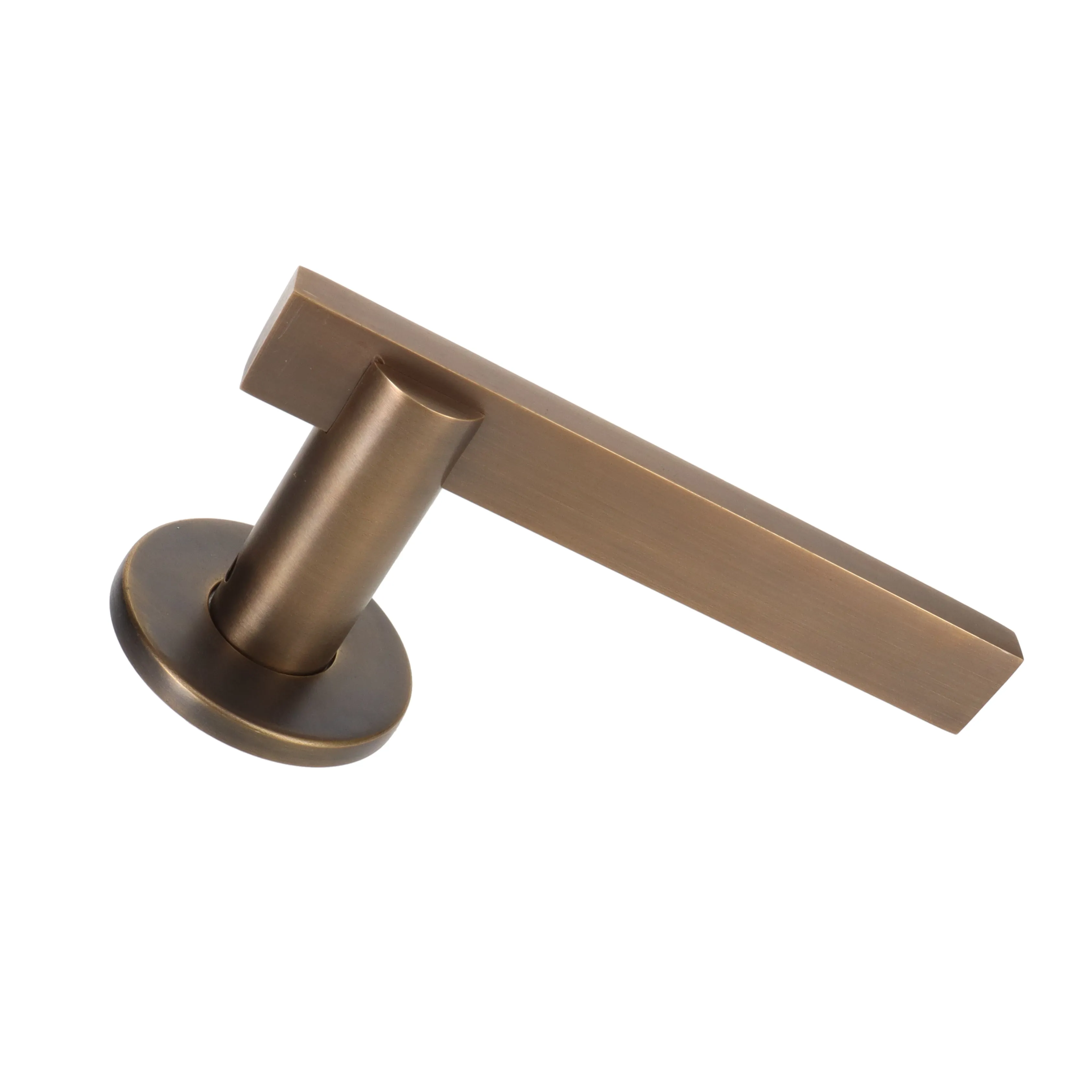
Architectural hardware is often one of the final details specified on a building project, but its finish can have a significant impact on the overall appearance of a door and the surrounding interior.
From contemporary stainless steel to traditional brass and darker modern finishes, the right architectural hardware finish needs to do more than look good. It should complement the design, suit the environment, and provide the durability required for its intended application.
At Dortrend, we manufacture architectural door hardware for a wide range of commercial, healthcare, education, hospitality,and public-sector environments. Here, we look at some of the key considerations when selecting an architectural hardware finish.
Why Is the Finish Important?
Door hardware is one of the most frequently touchedelements within a building. Handles, pull handles, push plates and othercomponents can be used hundreds or even thousands of times over their servicelife.
The finish therefore plays both an aesthetic and practical role.
A carefully selected finish can:
- Complement doors, frames and surrounding interior finishes
- Help create a consistent design throughout a building
- Provide the required level of durability
- Make architectural hardware easier to maintain
- Enhance the appearance of high-quality door furniture
- Support the overall architectural concept
For specifiers, the challenge is finding the right balance between appearance, performance and long-term maintenance. Dortrend can assist in all facets of the specification and even advise on split finishes,the different aging processes of the various product and obviously our Touchclean anti-microbial coating.
Satin Stainless Steel
Satin stainless steel is one of the most popular finishes for architectural door hardware, particularly in commercial and public buildings.
Its clean, under stated appearance works well with contemporary interiors and a wide variety of door materials and colours. The satin surface also makes it a practical choice for areas experiencing frequent use.
Stainless steel is particularly suited to projects where durability, corrosion resistance and ease of maintenance are important considerations.
It can be an excellent option for:
- Healthcare environments
- Schools and universities
- Offices
- Commercial buildings
- Public buildings
- High-traffic areas
Its neutral appearance also makes satin stainless steel easy to coordinate across a complete architectural ironmongery specification.
Satin and Polished Brass
Brass remains a popular material for architectural hardware and can introduce warmth and character into an interior.
Satin brass provides a softer, more restrained appearance, while polished brass delivers a brighter and more traditional aesthetic. Available on solid brass as living finishes or sealed with electrophoretic lacquers or as PVD finish for an aesthetic finish that lasts and will not age.
Depending on the design of the hardware and surrounding interior, brass finishes can work equally well in traditional and contemporary environments.
They are particularly effective when co-ordinated with other details such as lighting, signage, furniture and decorative metalwork.
Dark and Contemporary Finishes
Dark architectural hardware has become increasingly popular within contemporary interiors.
Black and other darker finishes can create a strong contrast against light-coloured doors and provide a distinctive design feature. Alternatively, when used against darker doors, they can contribute to a more subtle and coordinated appearance.
These finishes are frequently specified for modern offices, hospitality projects, residential developments and design-led commercial interiors.
However, the appearance should not be the only consideration. The type of coating or finishing process used, the expected level of traffic and the maintenance requirements should all be assessed before specifying a finish.
Living brass finishes are the most desired and reallooking which will age and change with time, whilst ceramic and PVD finishes would stay how they are the day they were fitted, anodised and powder coated finishes whilst different offer more cost effective options.
Matching Finishes Across a Project
Consistency is an important part of any architectural hardware specification.
A door may incorporate several visible pieces of hardware, including lever handles, pull handles, push plates, finger plates, escutcheons, and other accessories. If these components have noticeably different finishes, the result can detract from an otherwise carefully considered interior making the project look like its been done on a budget not to a budget.
Where possible, finishes should therefore be co-ordinated across the complete door and any other architectural aspects of the job. It is worth considering other visible metalwork within the building, including handrails, balustrades, lighting, bathroom fittings and signage.
Dortrend are experts in finish matching not only at sampling stage but on supply able to match other aspects of a job, ideally by sampling and viewing other samples.
Swatches and finished product are always available on request and assist all levels of the specification.
Consider the Environment
Not every finish is suitable for every application.
Before selecting architectural hardware, specifiers should consider the environment in which the product will be installed, whether the finish is suitable and/or the clients expectations of the visual effects.
Factors can include:
Frequency of use: High-traffic environments require finishes capable of coping with regular contact and cleaning explanation of this and how it will affect the finish are key.
Cleaning regimes: Healthcare, education and other public environments may have demanding cleaning requirements particularly on anti-microbial products where chlorine based cleaners are sometimes used, again it’s about understanding and communication.
Internal or external use: Hardware exposed to weather or moisture may require materials and finishes offering greater corrosion resistance although almost all our finishes are usable in both environments.
Location: Coastal, industrial and other aggressive environments can place additional demands on metal components were 316 stainless with a PVD or ceramic finishes can be used.
Maintenance expectations: Some finishes naturally change in appearance overtime what we would refer to as a “living” finish, while others may require regular cleaning to maintain their original appearance.
Selecting a finish based on the actual operating environment can help maintain both performance and appearance throughout the product's service life and understanding of what is required and what certain finishes do are key to achieving not only specification but long-lasting client satisfaction.
Bespoke Architectural Hardware Finishes
Sometimes a standard finish does not provide the appearance required for a particular project.
Bespoke finishes can give architects and designers greater freedom to coordinate door furniture with a specific interior conceptor architectural palette.
At Dortrend, our in-house finishing capabilities enable us to work with customers on standard and bespoke architectural hardware requirements, including products designed for individual projects.
This flexibility can be particularly valuable where existing hardware needs to be matched, a particular aesthetic is required, a requirement for long lasting or even an aging “living finish” or a project calls for specialist door furniture.
Appearance Should Never Be Considered in Isolation
A beautiful finish is important, but architectural hardware must first perform its intended function.
When specifying door furniture, factors such as product design, material, durability, accessibility, fire-door requirements and the intended environment should be considered alongside the finish.
For specialist environments such as healthcare and mental-health facilities, additional considerations may also apply, including hygiene, safety and anti-ligature requirements.
The most successful specification brings these requirements together, providing hardware that performs correctly while complementing the architectural design.
Choosing the Right ArchitecturalHardware Finish
There is no single finish that is right for every project.
The best choice depends on the building, its users,the surrounding materials and the level of performance required. Satin stainless steel may provide the ideal combination of durability and contemporary appearance for one project, while brass, polished finishes or a bespoke option may be more appropriate for another.
By considering appearance, durability, environment, maintenance and coordination at the specification stage,architects and designers can select door hardware that continues to complement the building long after installation.
Talk to Dortrend About YourArchitectural Hardware Requirements
Dortrend manufactures architectural door hardwarefor projects across a wide range of sectors, with extensive in-housemanufacturing and bespoke capabilities.
Whether you are selecting a standard finish,co-ordinating hardware across a project or looking for a bespoke architectural hardware solution, our team can help you identify the right product and finish for your application.
A guide to our finishes can be found at Door Handle Finishes | Antique Brass & More
Contact Dortrend to discuss your architectural hardware requirements.
TouchClean® Anti-microbial coating goes from strength to strength.
Since the launch of the high tech nanotechnology anti-microbial coating TouchClean® it has become a best selling product. Now used in many schools, hospitals and other institutions where it is a silent guardian working a 24 hour seven day a week shift to protect people against viruses, bacteria and mould organisms.
TouchClean® is available as a ready applied invisible coating on all Dortrend’s products but can also be applied by spray coating to almost any surface where its photocatalytic action is powered by Ultra Violet frequencies in daylight or artificial light enabling it to destroy bacteria, spores, viruses, mould, odours and pollutants. It avoids the need for chemical cleaning and the by-products are harmless. Once applied it is presents no hazards to people or animals and goes on protecting for many years.
Originally developed by Dortrend as a coating for door furniture making it an ideal component of general anti-microbial programmes in hospitals, care homes, detention centres and other places where vulnerable people are cared for. The coating is also applicable where people congregate, such as buses, trains, nightclubs, cinemas, taxis, canteens and restaurants as well as where anti-microbial control programmes are indicated including, doctors surgeries, dental surgeries, schools and nurseries.
TouchClean® can be used to protect against a broad range of pathogens and is effective against MRSA, SARS, c. difficile, e.coli, as well as the much publicised swine flu. It has recently achieved great results in a coronavirus test which is available on request this was conducted by a UKAS independent test lab and has various proven anti-viral tests.
Testing TouchClean anti-microbial coating
TouchClean has been tested to EN13697:2001 - A stringent testing method for chemical disinfectants and antiseptics. It is a quantitative non porous surface test for the evaluation of bactericidal and/or fungicidal activity of chemical disinfectants used in the food, industrial, domestic and institutional areas.
The test was carried out by applying the product to a metal surface to replicate the actual use and MRSA bacteria were added to this surface for the test. Users should be wary of tests that have been carried out in aqueous environments (adding to bacteria in a body of liquid) as this does not reflect actual conditions in use and are not real world tests.
A copy of the test certificates are available upon request.
Touch clean hardware is a safe cost effective range of anti-viral or anti-bacterial (antimicrobial) range of door handles.
Call 01299 827837 now for more information or download our brochure
This is produced through the process of PVD (Physical Vapour Deposition) Titanium Ion Plating which improves the performance of stainless steel by increasing wear, scratch and corrosion resistance making its durability far superior to conventional coating methods such as electroplating or powder-coating.
Below see the wide range of colours we can supply on our Stainless Steel ranges :
Gold Brass Blue
Gunmetal Charcoal Purple
Champagne Rose Gold Nickel
Bronze Copper Smoke
Chrome Stainless Steel Rainbow
Benefits of PVD
Reduction of the friction coefficient
Improved corrosion resistance
Clean process
High wear resistance
Attractive aesthetic appearance
These products are manufactured from high quality HE9 aluminium, 316 stainless steel and electrophoretic coated brass especially suitable for pressings, extrusions and diecastings. Most of these items require surface treatment to inhibit corrosion, and whilst a product may remain mechanically sound for a lifetime, its appearance may deteriorate more quickly, mainly due to the conditions of exposure in service. Dust is one of the main reasons for corrosion, either acid or alkaline. Salt in marine atmospheres is also very corrosive. We recommend, therefore, that our products be kept clean by frequent dusting, and an occasional wipe with warm soapy water. This is far more effective than the more drastic treatment with polishes, some of which are very abrasive and can damage the surface.