




Our Range
See All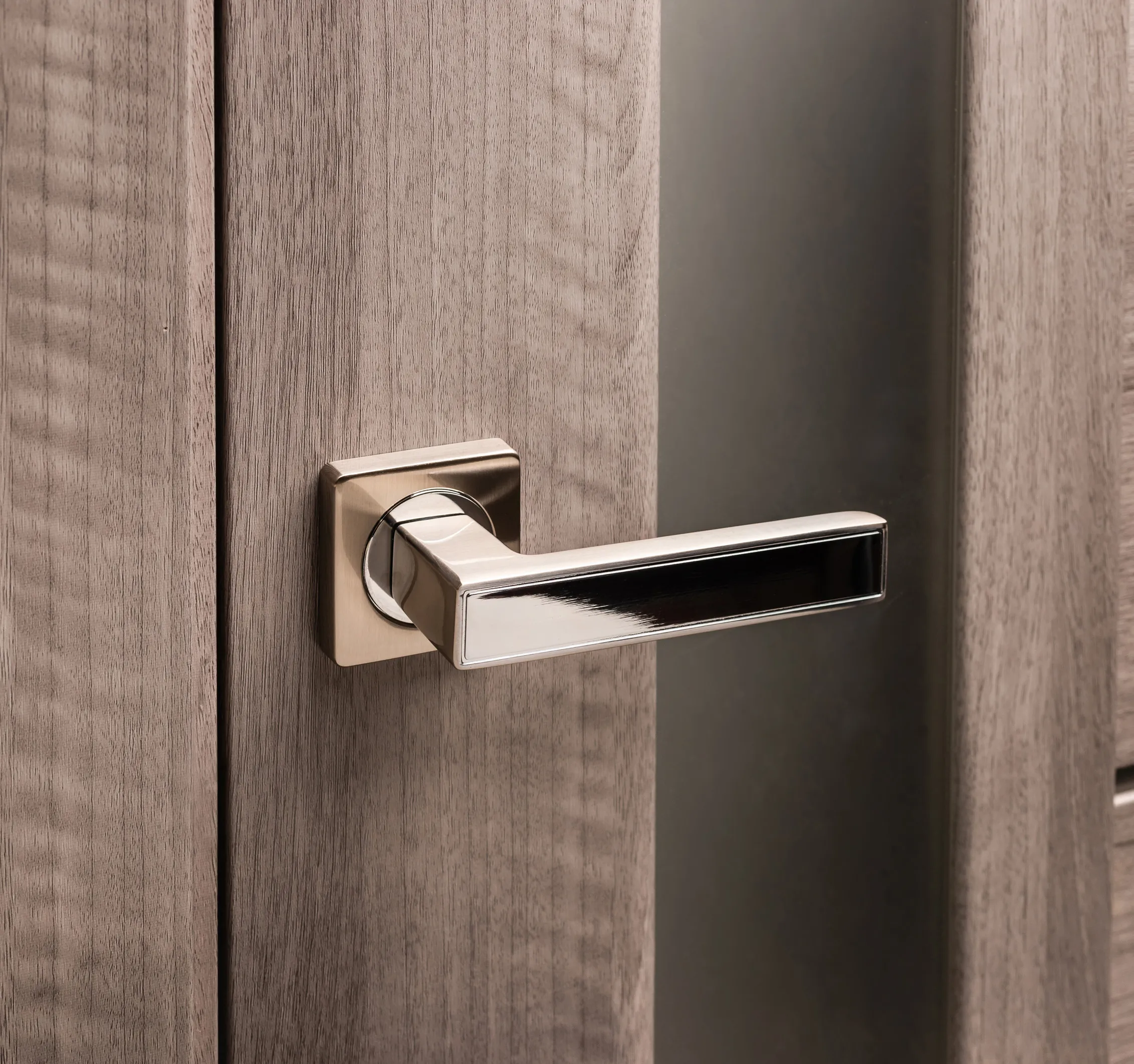
Specification
Door Hardware
Designer Hardware

Beyond Compliance: Specifying Door Hardware for Inclusive Buildings
For architects, interior designers and architectural ironmongers, accessibility is sometimes reduced to a series of dimensions: door widths, clear openings, mounting heights and opening forces.
Those measurements matter. But genuinely inclusive door design asks a broader question:
How easy is this door for different people to understand, reach, grip and operate?
That distinction is important because door furniture is one of the few architectural components occupants physically interact with throughout a building. A beautifully detailed entrance or carefully planned circulation route can still create difficulty if the final interaction with the door requires excessive strength, dexterity or an awkward movement.
For specifiers, inclusive ironmongery therefore deserves consideration much earlier than the final hardware schedule.
Accessibility is not simply a specialist requirement
Alongside the regulatory framework, BS 8300-2:2018 remains current as of September 2026. Its approach is particularly useful because it considers inclusive design in terms of accommodating people with the widest range of characteristics and capabilities rather than treating accessibility solely as provision for a separate group of users.
That principle has consequences for door hardware.
Instead of asking whether a particular handle is a "disabled handle", a better question is whether the hardware makes the door straight forward for as many users as reasonably possible.
The hand should influence the handle
A door lever creates a simple mechanical advantage, but its precise geometry can make a significant difference to the user.
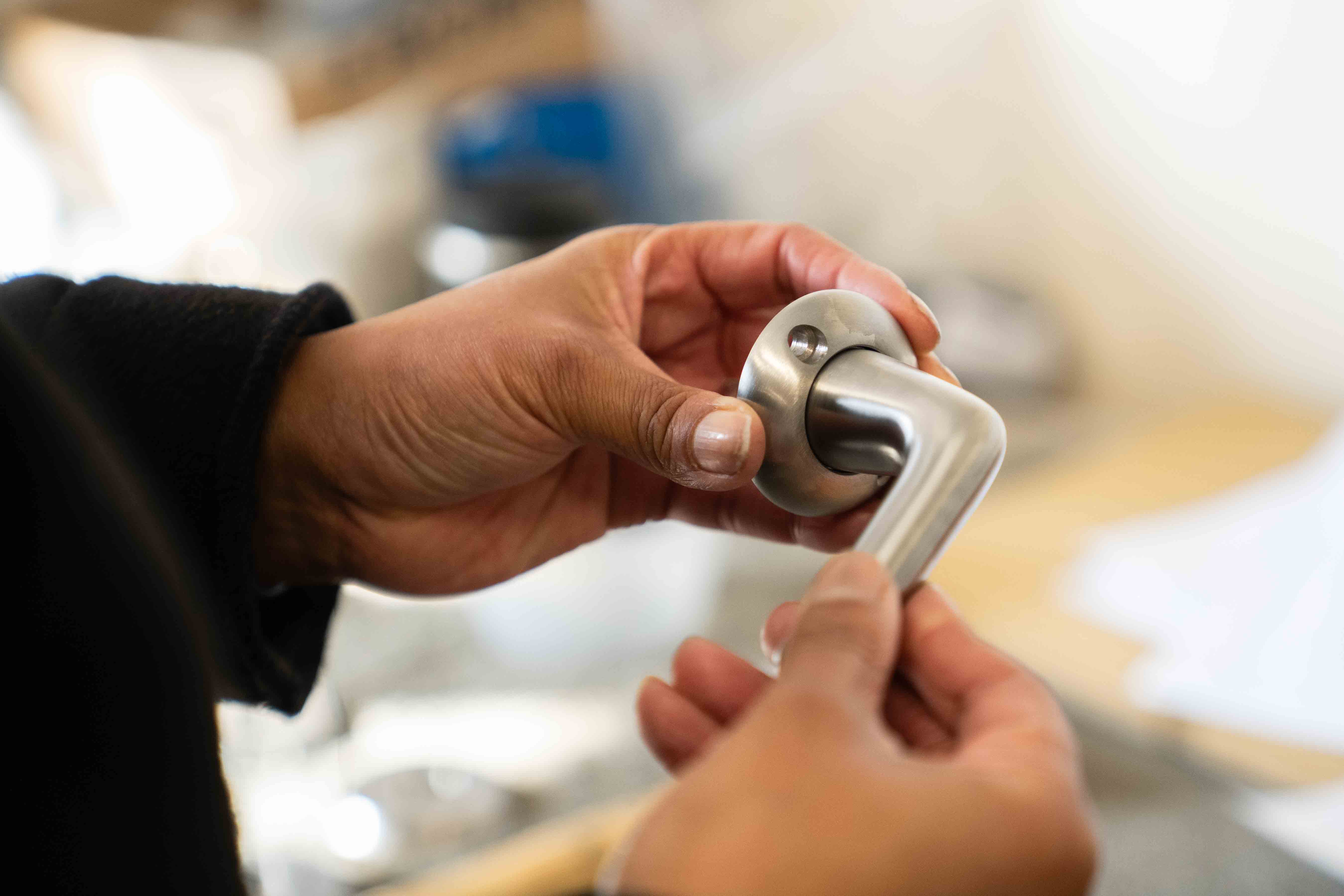
Consider someone with reduced grip strength, limited finger movement or difficulty rotating the wrist. A small knob requiring a firm grasp and twisting movement presents a very different interaction from a lever that can potentially be operated using the hand, wrist or forearm.
That is why specification should consider more than appearance.
Lever length, diameter, shape, clearance from the door face and the space around the fitting can all influence usability.
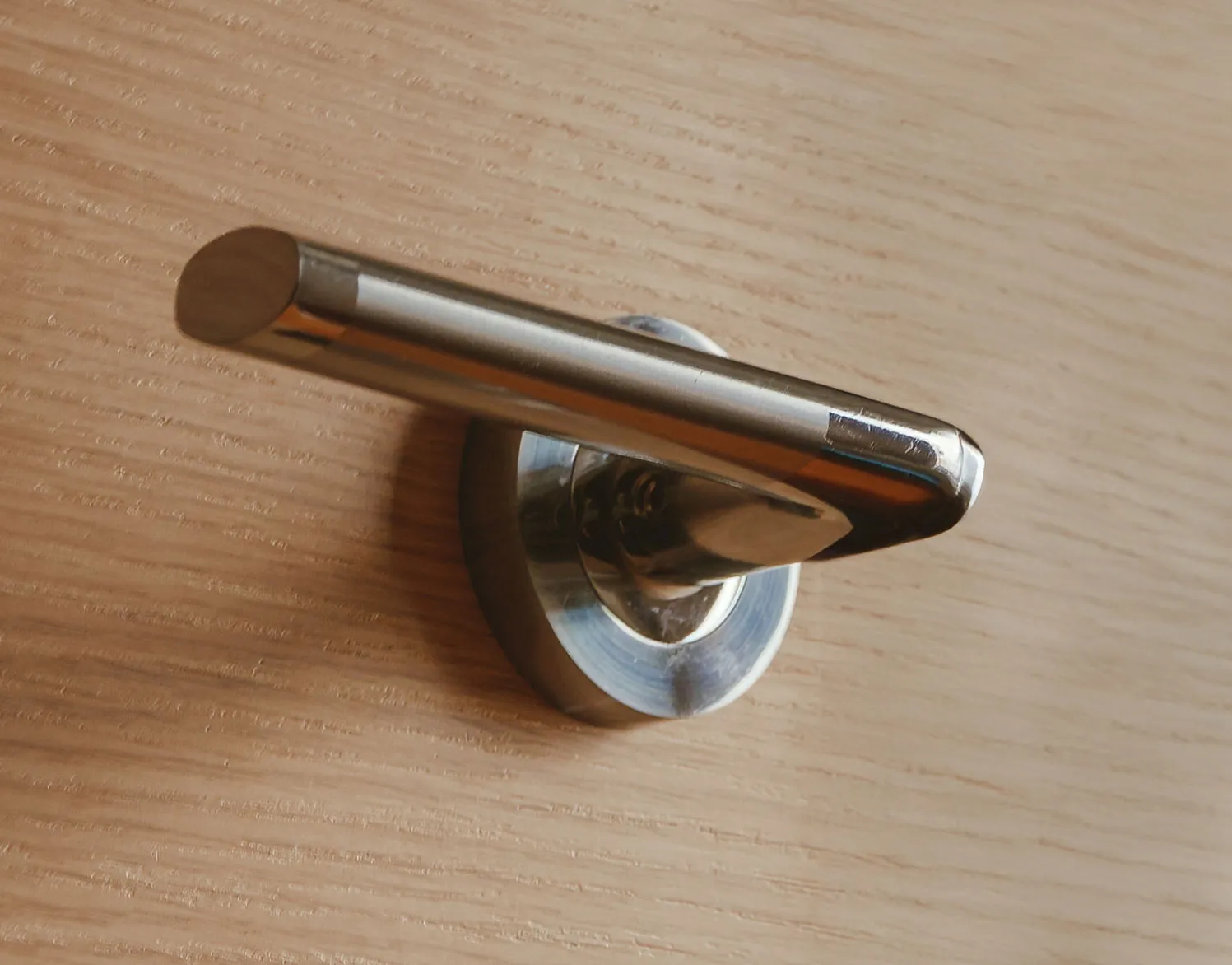
A return-to-door lever can also have practical advantages in appropriate applications, including reducing the possibility of clothing or carried items catching behind the end of a projecting lever.
None of these features should be considered independently from the complete door.
The easiest handle cannot rescue a difficult door
This is one of the most important points for designers.
A highly usable lever fitted to a door requiring excessive force to open does not result in an accessible entrance.
The user experiences the whole assembly :handle, latch or lock, hinges, seals, door closer, door mass and any pressure differential across the doorway.
Consequently, the architect, door manufacturer and architectural ironmonger need to co-ordinate their decisions.
The hardware schedule should not become the place where accessibility problems created elsewhere in the door set are expected to be solved.
Think about people carrying things
Inclusive design also benefits from considering ordinary situations rather than only permanent physical impairment.
Imagine somebody approaching a door while carrying files.
A parent pushing a buggy.
A hospital employee carrying equipment.
Someone using a walking aid.
A person whose hand is temporarily injured.
Or an older occupant with reduced grip strength.
A fitting that can be operated without a tightly controlled finger-and-thumb movement can make the building easier for all of these people.
This is where inclusive design and good everyday design often become the same thing.
Visual contrast deserves consideration
Door furniture is tactile, but it is also visual.
For some users, being able to distinguish the operating hardware from the door surface can help make its location and purpose easier to identify.
That means finish selection should not be made solely by matching every metallic element within an interior.
An interior designer might understandably want complete tonal consistency between door leaf, handle and surrounding finishes. In some circumstances, however, greater visual differentiation can improve usability.
The appropriate solution depends upon the project, but the issue deserves to be discussed rather than discovered after installation.
There is no universal accessible handle
Another potential specification mistake is assuming that one product automatically solves accessibility across an entire building.
Different doors perform different functions.
An entrance, office, hospital bedroom, accessible WC, school classroom, and plant room do not necessarily need identical operating hardware.
Some doors may use levers. Others may require pull handles, push plates or specialist configurations.
The objective is consistency of usability, not necessarily identical hardware everywhere.
This distinction gives architects and interior designers greater design freedom while allowing the ironmonger to respond properly to each door set.
Durability is part of accessibility
Hardware that becomes loose, stiff or difficult to operate through wear is no longer performing as originally specified.
Durability should therefore be considered an accessibility issue as well as a maintenance issue.
For lever handles and knob furniture, BSEN1906 remains the current British adoption of the relevant European standard as of September 2026, although BSI currently marks it as under review. It addresses requirements and test methods for lever handles and knob furniture.
Professional specification should consequently consider the intended duty of the hardware rather than selecting products simply because their appearance suits the scheme.
A handle used occasionally in a private office has a very different working life from one installed on a busy hospital circulation door.
Inclusive design and specialist healthcare requirements can overlap
Healthcare presents an especially interesting challenge.
A building may be occupied by people with limited mobility or strength while simultaneously requiring extremely durable hardware and, in particular areas, additional safety considerations.
Mental-health environments can add ligature-risk requirements.
These objectives need to be considered together.
A product should not become difficult to operate simply because it has a specialist safety function, nor should an accessible fitting be selected without considering risks specific to its location.
The correct solution comes from understanding the users, environment and risk assessment before choosing the hardware.
This is prudent in all our healthcare ranges from decision on ligature levels vs grip and the dexterity of the user to large outward cranking harder for mainstream healthcare
Good accessibility does not have to look institutional
This is particularly relevant to interior designers.
Historically, products intended to improve accessibility have sometimes been visually separated from mainstream architectural hardware. That can unintentionally make inclusive provision appear clinical or institutional.
There is no reason why ease of operation and considered design should inherently conflict.
Proportion, material and finish can still be developed as part of the architectural language of the project at Dortrend we manufacture larger lever sets as standard the grip would be 20% bigger as bigger is better when it comes to grip.
The better objective is hardware that simply feels intuitive to use, regardless of whether the person operating it has a particular accessibility requirement.
When standard products are not quite right
Occasionally a project exposes a conflict between accessibility, aesthetics and technical requirements that standard catalogue products cannot resolve satisfactorily.
This is where direct dialogue with a manufacturer can become valuable.
Dortrend International has manufactured door hardware in Worcester since 1972 and says more than 85% of its products are now manufactured at its own factory. Its range includes lever and pull handles intended to assist less physically able users alongside architectural, healthcare and anti-ligature hardware. www.dortrend.co.uk
Dortrend also offers custom sizing, finish matching and sample manufacture through its bespoke service.
That manufacturing capability can be useful where a project needs to reconcile an unusual door condition, particular aesthetic requirement and practical user need.
The important point is that bespoke development should preserve the project's applicable performance requirements rather than bypass them.
Seven questions for the hardware schedule
Before signing off door furniture, it is worth asking:
These are simple questions but asking them early can expose specification conflicts before products reach site.
Designing for the widest range of people
Inclusive architecture is often achieved through relatively small decisions repeated throughout a building.
Door furniture is a good example.
The difference between a fitting that can only be comfortably operated by a strong, dexterous hand and one usable by a much wider range of people may appear modest on a hardware schedule.
For the person encountering that door, the difference can be considerable.
That is why architects, interior designers and architectural ironmongers should regard accessibility as more than a final compliance exercise.
The best inclusive door hardware does not draw attention to the fact that it is accessible. It simply makes the building easier to use.