How to Choose Entrance Door Pull Handles: Size, Fixings and Finish
To choose an entrance door pull handle, start with the door: its height, weight, material and thickness. Entrance doors usually suit long pull handles that people of every height can reach, with a bar that is comfortable to grip. Pick the fixing to suit the door - back to back, bolt through or face fixed - then choose a hard-wearing finish that contrasts with the door.
The entrance pull handle is often the first piece of door hardware a visitor touches when entering a building. It needs to complement the architecture, cope with intensive use and make a large or heavy door comfortable to operate.
The correct choice depends on the door’s size, weight, material and method of operation. The handle’s length, grip, fixing method and finish must then be selected as part of the complete entrance doorset.
1. Start with the entrance door
Entrance doors are normally larger and heavier than internal doors and may have powerful door closers fitted. Before choosing a handle, gather the following information:
- The door’s height, width and approximate weight
- Whether it is made from timber, glass, aluminium or steel
- The door thickness and, for glass doors, the glass type and thickness
- Whether it is a single or double door
- Whether it operates in one direction or both directions
- The locking, access-control and door-closer hardware being specified
- Whether a handle is required on one or both sides
Choosing the handle before the door is manufactured allows fixing points, reinforcement and clearances to be coordinated properly.
2. Choose the pull-handle length
Entrance pull handles are usually considerably longer than internal pull handles. A longer handle gives users more leverage when opening a heavy door and provides several comfortable gripping heights.
This can make the entrance easier to use for adults, children and wheelchair users. As a broad principle, taller and heavier doors generally suit longer handles. On large glazed entrances, a pull handle may extend across a substantial proportion of the door’s height.
The correct dimensions should always be checked against the door design, the project’s accessibility strategy and current guidance, including the relevant provisions of BS 8300 and Approved Document M.
3. Consider bar diameter and grip
A pull-handle bar should feel substantial without being difficult to grasp. It also needs enough clearance from the door to prevent the user’s knuckles touching the door surface.
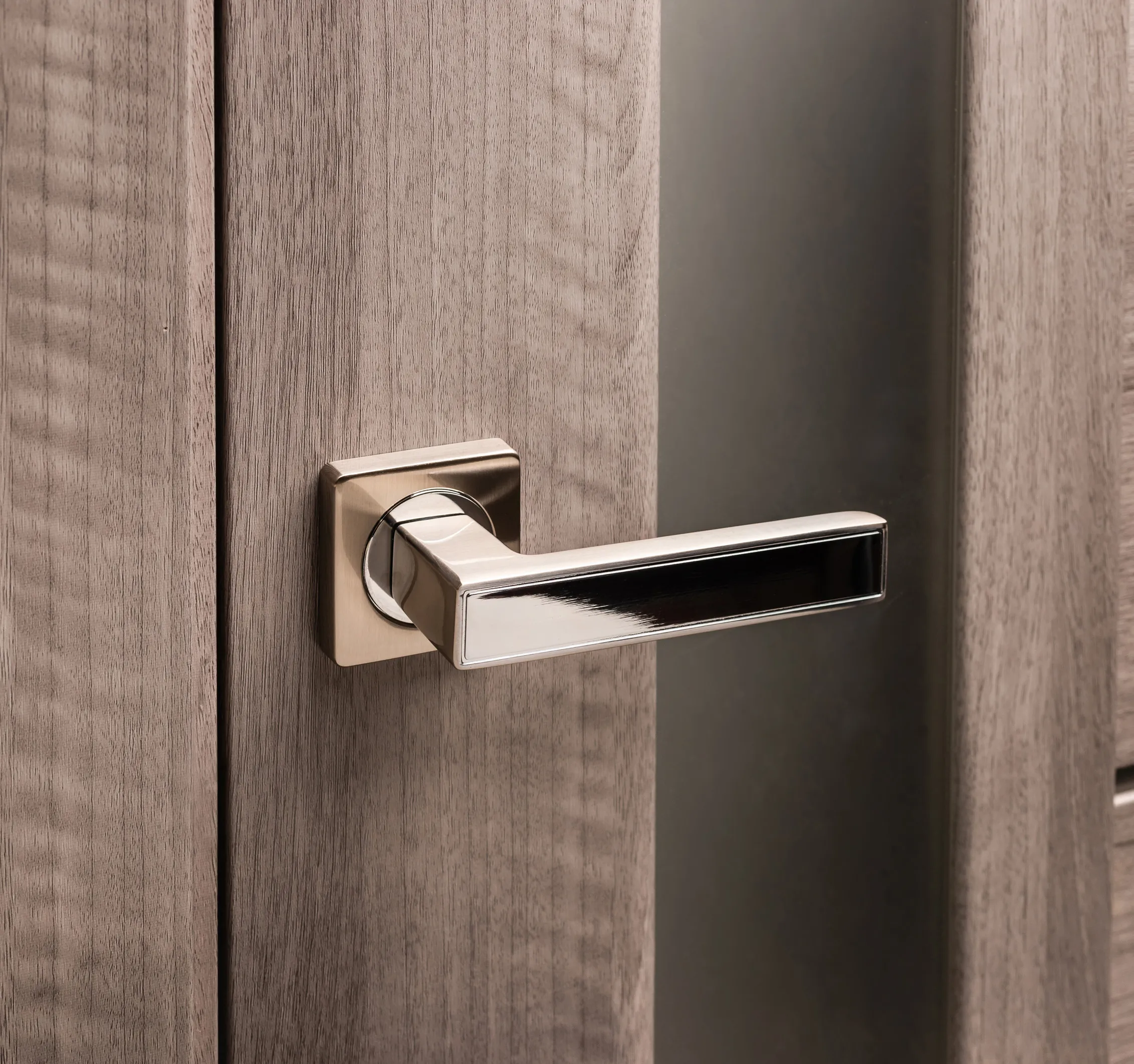
Round bars are comfortable and allow the hand to approach from different angles. Square, rectangular and flat profiles can produce a sharper architectural appearance, but their corners and edges should remain comfortable to hold.
Consider users wearing gloves and anyone with reduced grip strength or dexterity. A visually impressive handle will still be unsuccessful if people cannot use it comfortably.
4. Select the correct fixing method
| Fixing method | How it works | Typical application |
|---|---|---|
| Back to back | Two handles are connected through the door using one coordinated set of fixings. | Glass and timber doors requiring a handle on both faces. |
| Bolt through | One handle is secured using bolts passing through the door. | Single-action doors with a push plate or no pull handle on the opposite face. |
| Face fixed | The handle is secured from the visible face without fixings passing completely through the door. | Doors where through-fixing is not possible or appropriate. |
On frameless glass doors, the fixing assembly must distribute the load without damaging or placing excessive stress on the glass. It should also look properly finished from both sides. Always provide the glass type and thickness when requesting a quotation.
5. Choose a finish for the conditions
| Finish | Suitable applications |
|---|---|
| Satin stainless steel | Busy commercial entrances and external doors requiring a durable, low-maintenance finish. |
| Anodised aluminium | Lighter-weight handles available in satin, polished, black, gold and other anodised colours. |
| Living brass or bronze | Hotels, restaurants, residential developments and prestige offices where a developing patina is desirable. |
| PVD | Projects requiring a rich metallic colour with strong wear resistance. |
| Powder coating | Brand colours, RAL colours and handles requiring strong visual contrast with the door. |
Entrance handles are among the most frequently touched surfaces in a building. In healthcare, education and other high-use environments, an anti-microbial coating such as TouchClean® may also be considered.
6. Think about accessibility and visual contrast
An accessible entrance handle should be easy to identify, reach and grip. Contrast between the handle and the door helps people with visual impairments locate the operating hardware.
This is particularly important on glass entrances, where reflections and the view through the door can make a handle difficult to distinguish. Powder-coated colours, split finishes or a contrasting backplate can improve visibility without changing the fundamental handle design.
The complete door should also open with a reasonable amount of effort. Handle selection cannot compensate for a closer that is incorrectly specified or adjusted.
7. Coordinate the entrance with the interior
The main entrance establishes the visual language of the building. Specifying the pull handle in the same material or finish as the internal levers, knobs and cabinet hardware creates a coordinated scheme.
On a single-action entrance, a pull handle can be paired with a matching push plate on the opposite face. Dortrend’s wider range of pull handles can be coordinated with other architectural hardware throughout a project.
Maintaining entrance pull handles
Entrance handles experience more intensive use, impact and exposure to weather than most internal hardware.
Stainless steel and anodised aluminium normally require little more than regular cleaning with warm water, mild detergent and a soft cloth. Abrasive cleaners and harsh chemicals should be avoided unless specifically approved for the finish.
Unlacquered brass and bronze will naturally develop a patina when exposed to touch and weather. If a stable, bright appearance is preferred, consider a lacquered or suitable PVD finish.
On very busy doors, include the handle fixings in the building’s maintenance inspections. Repeated movement of a large door can loosen fixings over time if they are not checked.
Common entrance-handle mistakes
- Selecting the handle after the door has been manufactured and discovering that the reinforcement or fixing holes are unsuitable
- Using a short internal pull handle on a large, heavy entrance door
- Choosing a bar diameter that is uncomfortable to grip
- Leaving insufficient clearance between the handle and the door
- Failing to provide visual contrast on a glazed or similarly coloured door
- Specifying a finish that is unsuitable for weather exposure
- Using different and unrelated finishes at the entrance and throughout the interior
- Failing to coordinate the handle with access control, locks and door closers
Custom lengths, finishes and branding
Imported pull handles are often available only in fixed lengths, diameters and finishes. Working with a manufacturer allows the handle’s length, fixing centres, bar diameter, projection and finish to be adapted to the entrance.
Logos, room information or other graphics may also be engraved or laser marked onto suitable handles and plates.
Dortrend developed bespoke 1800 mm pull handles for heavily glazed doors at 20 Fenchurch Street in the City of London. The handles needed to remain rigid across their full length, include substantial flush-fitting legs and have consistently softened edges. They were completed in a matt-black, soft-touch finish.
Read more about the 20 Fenchurch Street bespoke pull-handle project, explore standard Guardsman entrance pull handles, or discuss completely bespoke door handles with the Dortrend team.
Entrance pull-handle checklist
- Confirm the door height, width, weight, material and thickness
- Decide whether handles are required on one or both faces
- Select a length that provides suitable leverage and gripping heights
- Check that the bar diameter and projection are comfortable
- Choose back-to-back, bolt-through or face-fixed installation
- Coordinate the fixings with the door manufacturer
- Select a finish appropriate for the weather and level of use
- Provide sufficient visual contrast
- Coordinate the handle with locks, access control and door closers
- Confirm maintenance and replacement requirements
Entrance pull-handle FAQs
What length pull handle do I need for an entrance door?
It depends on the height and weight of the door and the people who will use it. Entrance doors generally suit longer handles because they provide more leverage and several gripping heights. Provide the door dimensions when requesting a recommendation.
Can pull handles be fitted to glass doors?
Yes. They must use fixings designed for the particular glass installation. Give the manufacturer the glass type and thickness when making an enquiry.
What is the difference between back-to-back and bolt-through handles?
A back-to-back arrangement connects two handles, one on each side of the door. A bolt-through arrangement secures a single handle through the door, often with a push plate on the opposite face.
Which pull-handle finish performs best outdoors?
Stainless steel is a durable and low-maintenance choice for many external entrances. Living brass and bronze can also be used outdoors, but they will naturally develop a patina unless protected by an appropriate coating.
Can a pull handle carry a logo?
Yes. Suitable pull handles and plates can be engraved or laser marked with logos, lettering or other project information.
Can Dortrend manufacture custom pull-handle lengths?
Yes. Dortrend can manufacture entrance pull handles with lengths, fixing centres, bar sizes and finishes adapted to the project.
Discuss your building entrance
To discuss an entrance pull handle, call Dortrend on 01299 827837 or contact the team with the door dimensions, material and fixing requirements.