




Our Range
See All
Specification
Door Hardware
Designer Hardware

When Standard Door Hardware Is Not Enough — A Specifier’s Guide to Bespoke Ironmongery
Architectural ironmongery is often specified from established product ranges, and for good reason. Proven products simplify selection, co-ordination, and procurement.
But buildings are not always standard.
An unusual door set, a demanding healthcare environment, a particular interior concept or a project requiring hardware to perform several functions at once can expose the limitations of an off-the-shelf approach.
For architects, architectural ironmongers and interior designers, the question then becomes: when is bespoke door hardware genuinely worthwhile, and when is it simply unnecessary complexity?
Bespoke should begin with a problem, not a shape
It can be tempting to think of bespoke ironmongery primarily as a visual exercise: changing the length of a pull handle, creating a particular profile or specifying a special finish.
Those can all be legitimate reasons for customisation, but the most useful bespoke development usually starts with a project requirement.
Perhaps a handle needs to integrate with an unusual door construction. A healthcare project may combine demanding durability,accessibility and safety considerations. An interior designer may want visible hardware to form part of a consistent architectural language across doors,cabinetry, and other elements.
The important question is not simply “Can we make something different?”
It is “What problem does the project need the hardware to solve?”
That distinction helps prevent bespoke design becoming decoration for its own sake.
Involve the ironmonger and manufacturer early
Timing matters.
Introducing a bespoke hardware requirement after doors have been ordered, hardware schedules completed and other components selected can create unnecessary complications.
Early collaboration gives the architect,architectural ironmonger, door manufacturer and hardware manufacturer an opportunity to consider the complete assembly.
That is particularly important because a handle does not work independently. Its dimensions, spindle, fixings, lock or latch,backplate or rose, door construction and other hardware can all influence the finished solution.
For interior designers, early discussion also makesit easier to co-ordinate proportions, finishes and detailing with the wider scheme rather than attempting to match them retrospectively.
Bespoke does not mean ignoring standards
A custom product still has to be suitable for its intended application.
For lever handles and knob furniture operating latches or locks, BS EN 1906:2012 remains listed by the British Standards Institution as current and under review as of September 2026. The standard covers areas including operating torque, free play, durability, static strength, safety and corrosion resistance. BSI Knowledge
This illustrates an important point for specifiers: changing a product aesthetically does not remove its performance responsibilities.
The applicable requirements will depend upon theproduct, doorset and application. Fire doors, escape-route doors, accessible environments and specialist healthcare settings can introduce additional considerations.
Consequently, a bespoke specification should establish its performance requirements at the beginning of development rather than trying to demonstrate suitability after the design has been finalised.
Accessibility needs to remain part of the brief
A beautifully designed handle is unsuccessful if some occupants struggle to use it.
For buildings other than dwellings in England, the current edition of Approved Document M provides guidance supporting compliance with Building Regulations requirements concerning access to and use of buildings. Its door-related guidance includes handles and opening forces. The current government version incorporates the 2024 amendments. GOV.UK
This matters when modifying proportions or developing an entirely new fitting.
Grip, projection, clearance, operating action and the behaviour of the complete door should all be considered alongside appearance.
Inclusive design should therefore form part of the initial bespoke brief rather than becoming a compliance check at the end.
Fire doors require particular care
Bespoke hardware intended for a fire-resisting doorset needs additional scrutiny.
The hardware fitted to a fire door is part of a larger system, and substituting or modifying components without appropriate evidence can be problematic.
Current government fire-door inspection guidance specifically includes hinges, locks and other ironmongery among the elements that should be checked.
Architects and ironmongers should therefore avoidassuming that because a custom handle can physically be attached to aparticular door, it is automatically appropriate for that doorset.
The relevant evidence and specification should be established for the actual application.
Where bespoke becomes especially valuable
Custom manufacture makes most sense when it producesa meaningful project benefit.
An architect might need hardware adapted around aspecialist door system. An interior designer might require a distinctive pull-handle proportion repeated throughout a building. An ironmonger might encounter an unusual fixing condition that standard products cannot satisfactorily address.
Specialist environments can create more complex briefs again.
Healthcare, mental healthcare and education buildings can combine heavy usage with accessibility, safety, cleaning and operational requirements. In these situations, developing the hardware around the application can be more useful than trying to make an inappropriate standard product fit.
Material and finish should be considered together
One advantage of working directly with a manufacturer is the ability to discuss how a design will actually be produced.
A finish that appears attractive on a sample needs to remain appropriate after repeated handling. A very slender profile may look elegant on a drawing but create manufacturing or performance challenges. A particular fixing arrangement might require more material than the original design allows.
Manufacturing knowledge can resolve these issues before they reach site.
It can also help designers distinguish between changes that are straight forward to manufacture and those that add considerable complexity without materially improving the finished project.
Bespoke can help create visual continuity
There is another reason for architects and interior designers to consider custom hardware: consistency.
Door furniture is repeated throughout buildings. Asa result, even a relatively small detail can become an important part of the architectural identity.
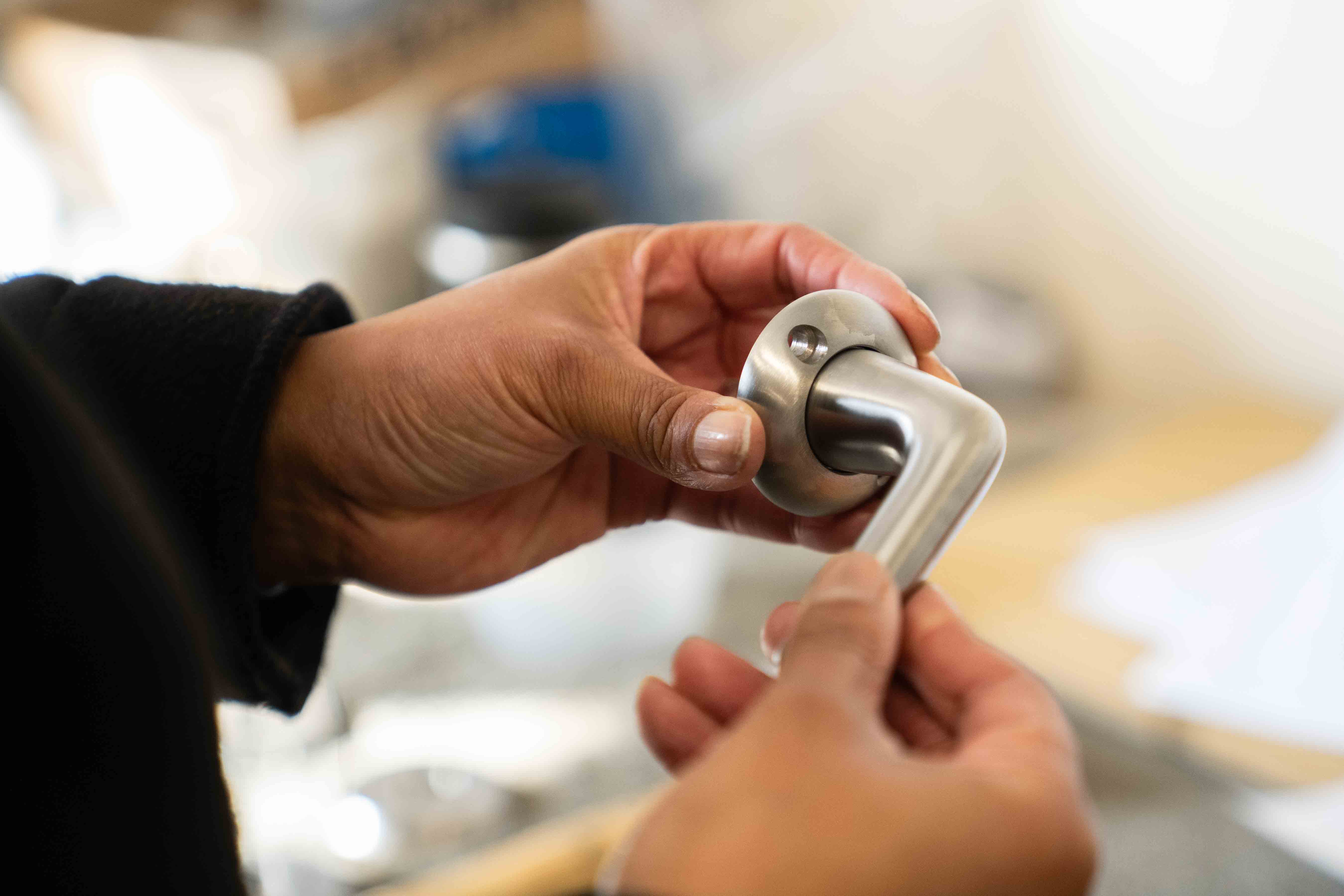
Dortrend's bespoke capability includes custom dimensions, proportions, profiles, finishes, coatings, material combinations,engraving and detailing. The company also develops coordinated hardware intended to integrate doors, cabinetry and other architectural elements. https://www.dortrend.co.uk/
That can allow hardware to respond to the interior concept without requiring every component to become a completely unique product.
Sometimes the most effective bespoke solution issimply a carefully considered adaptation of an existing design.
The advantage of designing close to the factory
Bespoke development becomes considerably easier when product designers and manufacturing teams can communicate directly.
Dortrend International was founded in 1972 and currently manufactures more than 85% of its products at its Worcester factory,producing tens of thousands of door-hardware products each year. Its manufacturing capabilities include machining, fabrication, welding, polishing and finishing alongside CAD/CAM and product-development facilities.
The company also invested in additional automated cutting equipment at the Worcester factory in August 2026, complementing technologies including CNC machining, laser cutting and 3D printing.
For a bespoke project, keeping design and production closely connected has a practical benefit: the people considering how the hardware should look and perform can work alongside those responsible for actually making it.
A useful bespoke brief
Before approaching a manufacturer, the project team should ideally be able to describe the intended environment, door type and construction, expected frequency of use, functional requirements, applicable accessibility or specialist requirements, desired material and finish, visual intent and any known standards or doorset constraints.
The manufacturer can then help determine whether an existing product already satisfies the requirement, whether an existing design should be adapted, or whether a genuinely new component is justified.
That first outcome is worth emphasising.
Good bespoke manufacturing does not mean making everything bespoke.
Sometimes the best technical advice is that a standard, proven product already does the job.
Better hardware begins with better collaboration
The value of bespoke architectural ironmongery is ultimately not its uniqueness.
It is the ability to resolve requirements that standard products cannot adequately satisfy.
For architects, that can mean protecting the designintent. For interior designers, it can create greater visual consistency. For architectural ironmongers, it can provide a practical answer to an unusual specification condition.
And when specialist design and manufacturing expertise are introduced early enough, those objectives do not have to compete.
The result should not simply be a different doorhandle.
It should be the right piece of hardware for thebuilding it was designed to serve.