




Our Range
See All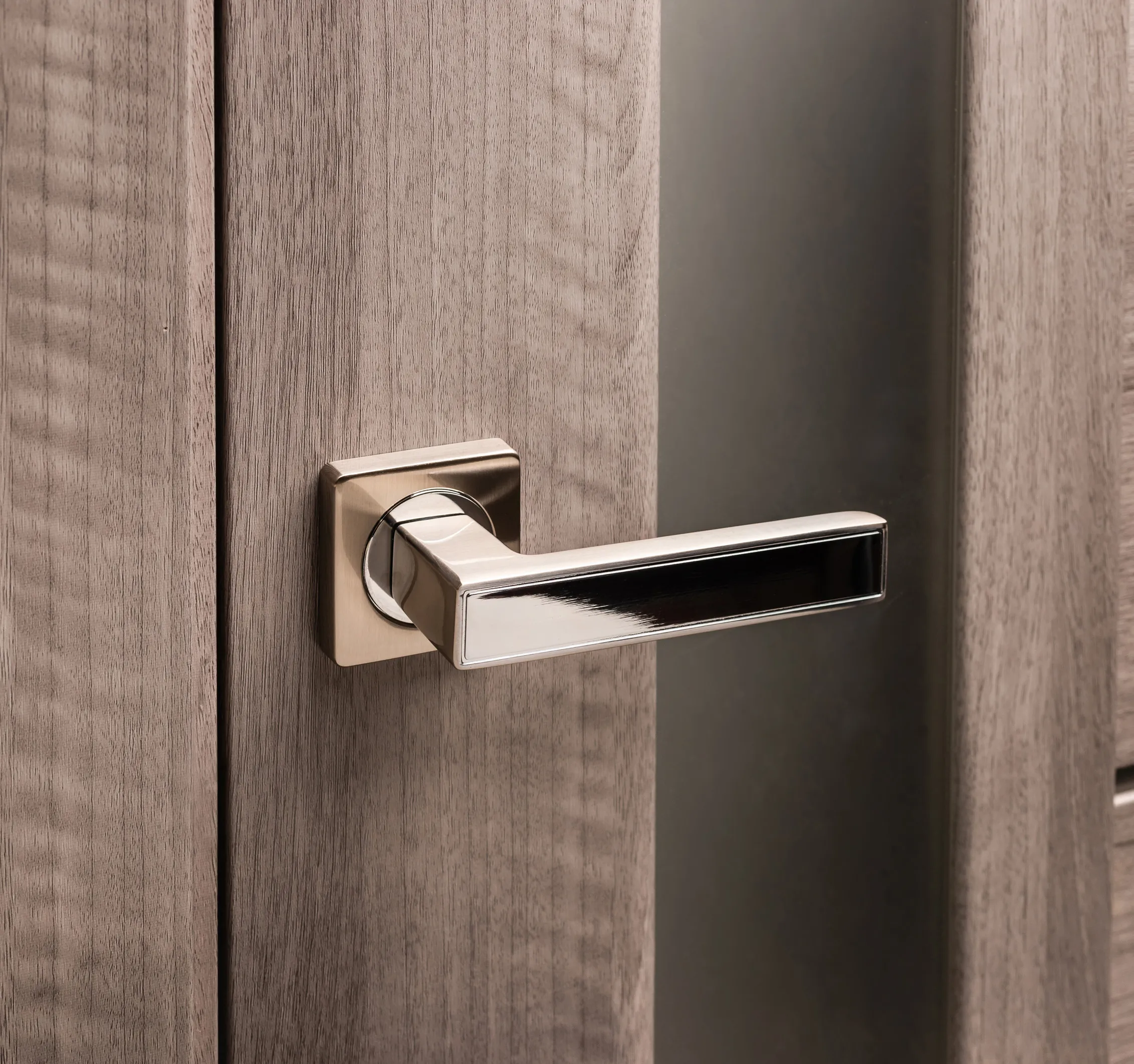
Specification
Door Hardware
Designer Hardware

Specifying Door Hardware for Coastal and High-Moisture Environments: Why Material and Finish Selection Matters
Technical guidance for architects, architectural ironmongers and interior designers
A door handle installed in a city-centre office may experience very different conditions from an identical fitting installed in a coastal hotel, leisure centre or exposed building entrance.
Both products may look identicalon the day of installation. Yet over time, their appearance and performance candiffer considerably.
For architects and architectural ironmongers, this highlights an often-overlooked aspect of specification: the environment in which door hardware operates can be just as important as the material from which it is manufactured.
Understanding corrosion resistance, surface finishes and maintenance requirements can help designers make more informed decisions, particularly where architectural appearance and long-term durability are equally important.
Not all stainless steel is the same
Stainless steel is widely specified for architectural door furniture because of its appearance, strength and corrosion resistance.
However, describing a product simply as stainless steel does not tell the specifier everything they need to know.
Different grades offer different levels of resistance to environmental conditions.
Two commonly encountered grades are 304 and 316 stainless steel.
Grade 304 is widely used for architectural applications, particularly in relatively mild environments.
Grade 316 contains molybdenum,which improves its resistance to chloride-related corrosion. This makes it particularly relevant where hardware may be exposed to marine atmospheres, road salt or other chloride-containing environments.
For architects, the lesson is straightforward: selecting stainless steel is only the beginning of the specification process.
Why coastal buildings present particular challenges
Coastal environments introduce airborne salt, moisture and other conditions that can accelerate surface deterioration.
The degree of exposure can vary significantly even within the same building.
An external pull handle facing prevailing winds may experience substantially greater exposure than hardware installed within a sheltered internal corridor.
Similarly, a fitting protected from direct rainfall may retain salt deposits that would otherwise be washed away.
This can create an unexpected situation in which a sheltered stainless steel component develops more visible staining than a nearby fitting regularly exposed to rain.
This demonstrates why geographical location alone is not enough to determine the appropriate material.
The actual installation conditions matter.
What is tea staining?
One issue associated with stainless steel in coastal environments is commonly known as tea staining.
This appears as brown discolouration on the metal surface.
Although it can resemble conventional rust, tea staining does not necessarily indicate serious structural deterioration. Nevertheless, it can be visually unacceptable, particularly on prestigious architectural projects where appearance is a significant part of the specification.
Tea staining can be influenced by several factors, including chloride exposure, surface finish, environmental conditions and cleaning frequency.
The solution is not simply to specify a more expensive material.
A successful approach considers the complete combination of stainless steel grade, surface condition, product design and anticipated maintenance.
Satin or polished stainless steel: does the finish matter?
Architectural ironmongery is frequently specified in satin stainless steel because of its understated appearance.
It complements contemporary architecture and works particularly well alongside timber, glass, stone and other natural materials.
However, surface texture can influence how readily contamination accumulates.
A rougher surface may provide more opportunities for deposits to collect, while smoother finishes can be easier to clean.
For exposed applications, specifiers should therefore consider the quality and characteristics of the surface finish rather than relying solely on the description satin stainless steel.
The direction of the grain, surface roughness and accessibility for cleaning may all influence long-term appearance.
This does not mean polished stainless steel is automatically the correct choice for every coastal project.
It means finish selection should consider performance as well as aesthetics.
Understanding corrosion-resistance standards
For architectural ironmongers,material selection should be supported by appropriate performance information.
BS EN 1670:2007, Building hardware — Corrosion resistance — Requirements and test methods, remains the current edition listed by the British Standards Institution as of October 2026.
The standard provides a classification system for the corrosion resistance of building hardware, based on neutral salt-spray testing.
It includes grades 1 to 5,representing increasing levels of corrosion resistance, alongside grade 0 where no corrosion-resistance requirement is specified.
However, there is an important distinction between laboratory testing and real-world exposure.
A product achieving a particular corrosion-resistance classification should not automatically be assumed to perform identically in every coastal, industrial or high-moisture environment.
The standard itself recognises that salt-spray results do not necessarily predict performance under all service conditions. ANSI Webstore
For specifiers, the correct approach is to consider the test evidence alongside the actual environmental conditions and intended application.
Don't overlook the fixings
A door handle is rarely a single component.
Depending on its design, it may incorporate fixing bolts, threaded inserts, mounting plates, washers and other elements.
These components can be less visible than the handle itself, but they remain important to the complete installation.
Specifying a corrosion-resistant handle while overlooking the material or suitability of its fixings can create unnecessary maintenance problems.
Contact between dis-similarmetals can also introduce galvanic-corrosion considerations under suitable environmental conditions.
Architectural ironmongers should therefore consider the complete fixing arrangement, including compatibility with the door construction and the manufacturer's recommendations.
Decorative finishes require thesame attention
Contemporary architectural projects increasingly use decorative metallic finishes.
Bronze, champagne, black, goldand other finishes can contribute significantly to an interior scheme.
However, the visual description of a finish does not establish its suitability for a particular environment.
Physical Vapour Deposition(PVD), powder coating, electroplating and other finishing processes have different characteristics, and performance can vary according to the substrate, coating system and application.
A finish that performs well in a dry internal environment may require further consideration before being specified for an exposed external entrance.
For architects and interior designers, the important questions include how the finish has been produced,what environmental exposure it is suitable for, and what maintenance is recommended.
Dortrend's published technical guidance discusses PVD finishes, 316 stainless steel and the additional demand sassociated with coastal and industrial environments. Dortrend
Where a particular decorative finish is required for a demanding location, supporting product-specific information should be requested before the specification is finalised.
The relationship betweenmaterials and interior design
Door furniture often provides a visual connection between different materials within a building.
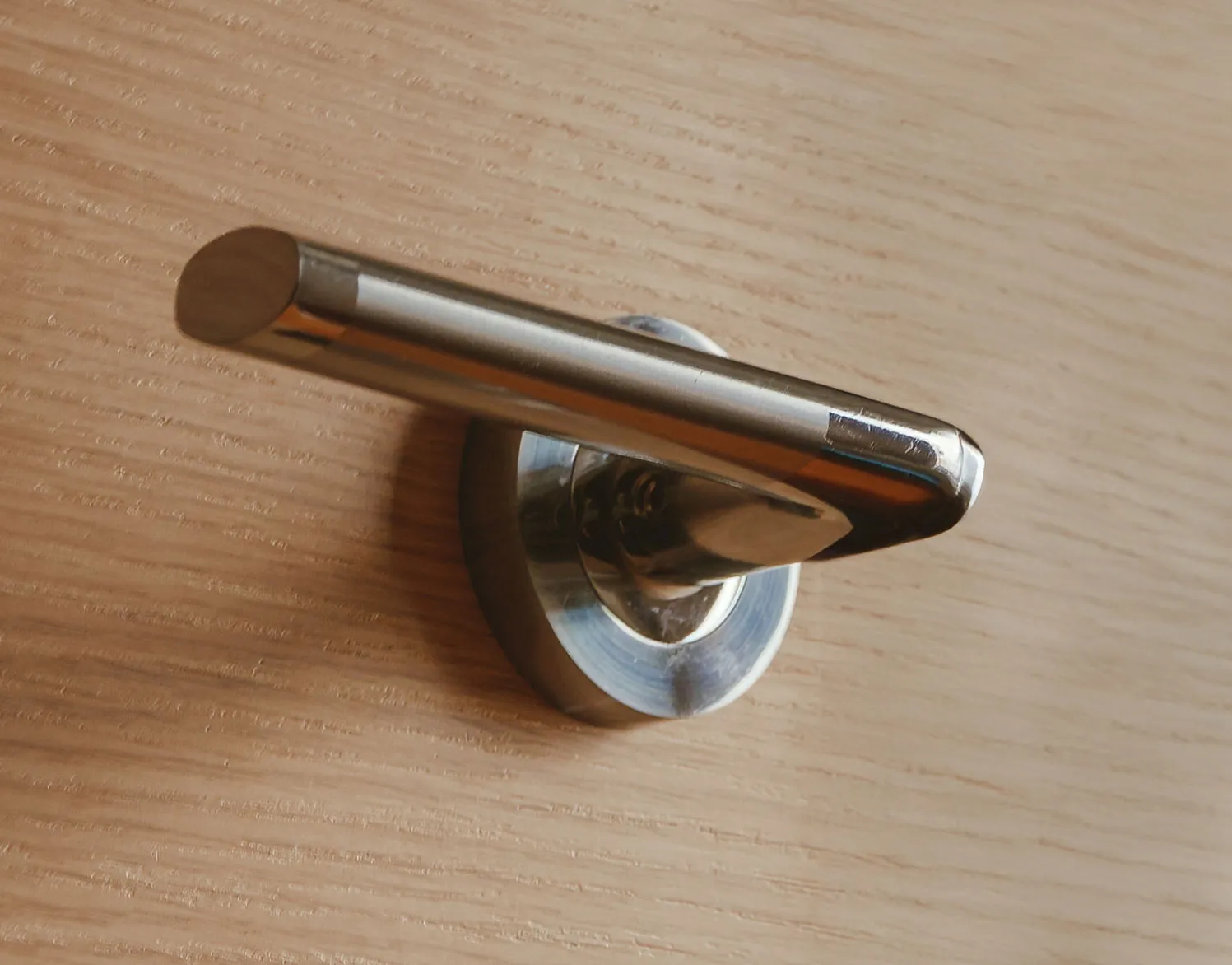
A satin stainless steel pull handle may complement natural oak doors, while darker metallic finishes can create contrast against pale timber or stone.
Mixed-material handles, including timber grips combined with metal components, can also introduce warmth and tactile interest.
For interior designers, these combinations offer considerable creative possibilities.
However, the materials should be assessed according to their intended environment.
A timber grip suitable for acarefully controlled interior may require different consideration when exposed to moisture, temperature variation or frequent cleaning.
Similarly, the metal components of a mixed-material handle should be selected for their actual operating conditions.
The aim is to achieve a consistent architectural appearance without compromising the suitability of the materials.
Maintenance should be discussed before installation
One of the most common misconceptions surrounding stainless steel is that it is maintenance-free.
In reality, even highly corrosion-resistant materials can benefit from appropriate cleaning.
Salt deposits, dirt and other contaminants may need to be removed periodically to maintain appearance.
Dortrend's published careguidance recommends regular dusting and occasional cleaning with warm soapywater for relevant metal products, while cautioning that abrasive polishes candamage surfaces. Dortrend
The precise cleaning regime should always reflect the product, finish, environment and manufacturer's instructions.
For architects and facilities managers, this raises a useful specification question:
What maintenance will the product require to retain its intended appearance throughout its working life?
That question is particularly important for hotels, public buildings and commercial developments where visible deterioration can affect the perception of the entire interior.
Why manufacturing knowledge matters
Material selection becomes more effective when the specifier can discuss the application directly with the manufacturer.
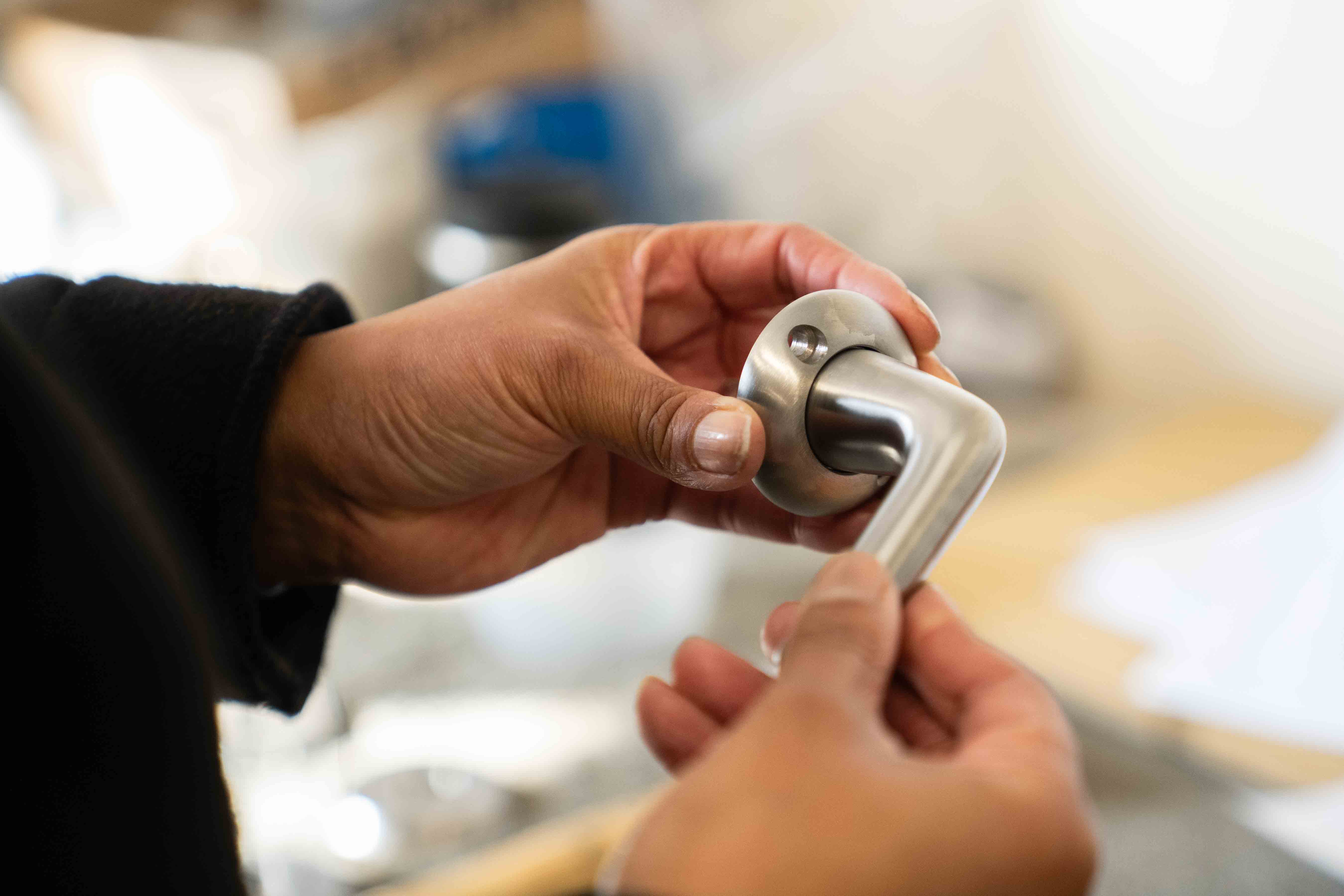
A manufacturer with in-house machining, fabrication and finishing capabilities can contribute practical knowledge about material selection, surface preparation, component geometry and production methods.
Dortrend International has manufactured architectural and specialist door hardware in Worcester since 1972.
The company states that more than 85% of its products are manufactured at its Worcester facility, where its capabilities include CNC machining, fabrication, welding, polishing and finishing.
For architects and architectural ironmongers, this connection between product design and manufacturing can be particularly valuable when discussing unusual environmental conditions or project-specific requirements.
Rather than selecting a product solely from its appearance, the specification can be informed by how the component is manufactured and how its materials and finish are expected to perform.
Five questions before specifying hardware for a demanding environment
Before finalising door furniture for a coastal, external or high-moisture application, consider the following:
These questions can help avoid selecting hardware that looks appropriate on the drawing but proves un-suitable once installed.
A better approach to long-term specification
Door furniture represents a relatively small proportion of a building's overall construction cost.
Yet it is highly visible,frequently touched and expected to remain functional and attractive for many years.
For architects, architectural ironmongers and interior designers, selecting the correct material and finish is therefore more than an aesthetic decision.
It is a balance between appearance, environment, performance and maintenance.
British manufacturers with specialist material and finishing knowledge have an important role in helping project teams understand those choices.
At Dortrend, more than five decades of architectural hardware manufacturing provide a foundation for discussing both the visual and practical requirements of a project.
Because ultimately, the right finish is not simply the one that looks best when the building opens. It is the one that remains appropriate for the environment in which it will be used
Specifying door hardware for a coastal or demanding environment? Contact Dortrend International to discuss suitable materials, finishes and project-specific manufacturing requirements