What Is Architectural Ironmongery? A Plain-English Guide
Architectural ironmongery is the hardware fitted to doors and windows in commercial and public buildings: handles, locks, hinges, closers, pull handles, push plates, signage and accessories. It is specified door by door in a door schedule, chosen for durability, safety, accessibility and a consistent look, and is usually supplied by a specialist architectural ironmonger.
Ask most people what ironmongery is and they will picture a hardware shop. In the building trade, architectural ironmongery means something more specific: the carefully selected hardware that makes every door in a building work safely, look consistent and last.
This guide explains what architectural ironmongery includes, how it is specified and who is responsible for selecting and supplying it.

What counts as architectural ironmongery?
A single office door might carry half a dozen pieces of ironmongery. Across a large building, that can add up to thousands of individual components.
The principal categories include:
- Door handles: lever handles, pull handles and knobs
- Locks and latches: mortice locks, cylinders, bathroom locks and escape hardware
- Hinges: selected and graded for the door’s weight, size and level of use
- Door closers: overhead closers, floor springs and concealed closers
- Protective plates: push plates, kick plates and finger plates
- Accessories: door stops, signage, escutcheons and bathroom turns
What makes a door handle architectural?
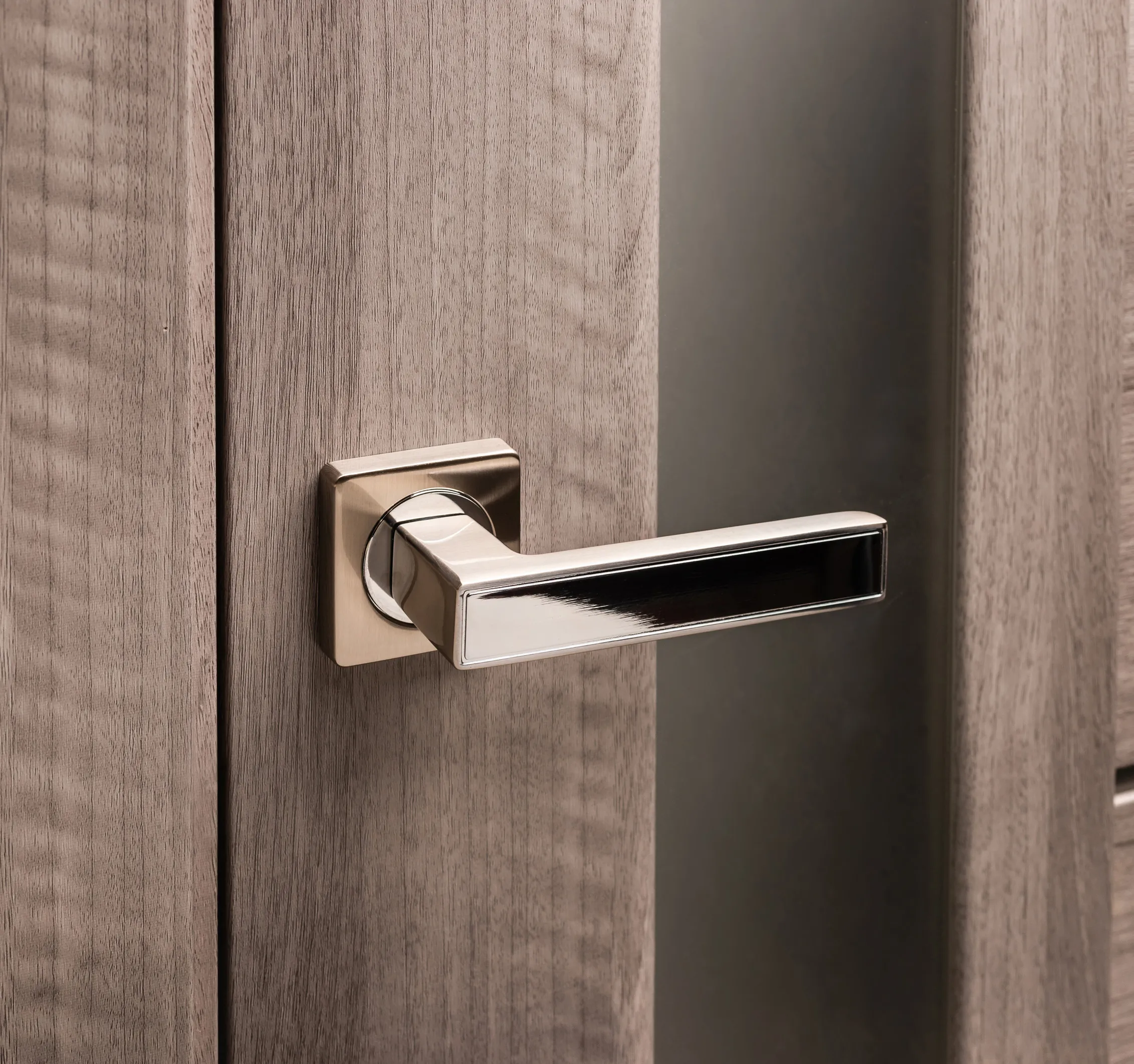
Architectural door handles are designed and specified for buildings where doors are used repeatedly and by many different people.
Compared with a typical domestic handle, architectural hardware normally uses stronger materials and fixings, more reliable springing and finishes capable of withstanding frequent handling and cleaning.
It also needs to remain consistent. Hundreds of doors across a building may need handles, pull handles and accessories with the same design and finish. The products may also need to satisfy accessibility, fire-safety, hygiene and durability requirements.
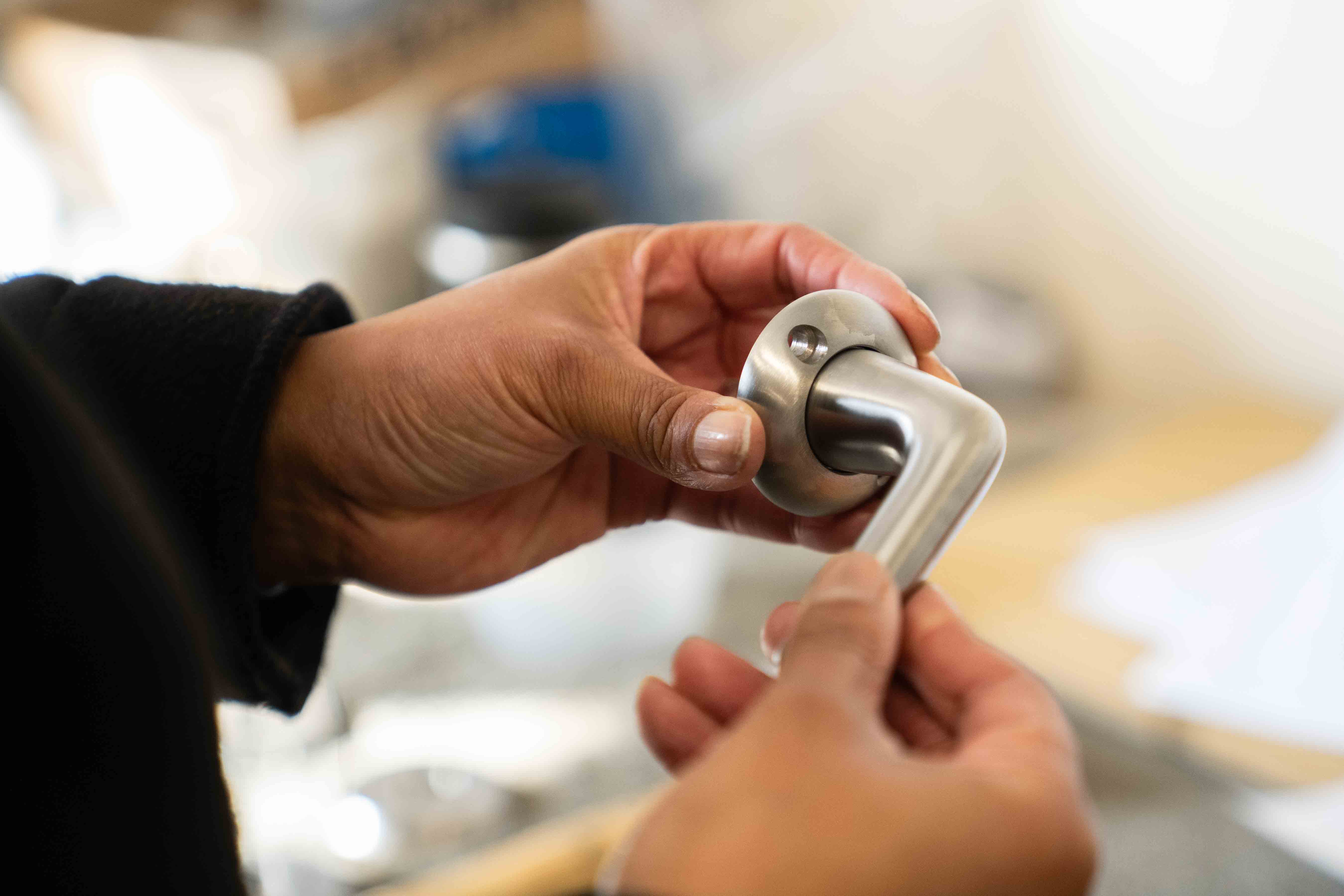
Our architectural door handles are manufactured in Worcester with these project demands in mind.

What is a door schedule?
Architectural ironmongery is specified through a door schedule. This document lists every door in the building, its type and use, and all the hardware it requires.
A typical door-schedule entry records:
| Column | What it records |
|---|---|
| Door reference | The door number shown on the project drawings |
| Location and use | For example, a classroom, ward bedroom, office or store |
| Door type | Single or double, timber, glass or metal, including any fire rating |
| Hardware set | The handles, lock, hinges, closer and accessories required |
| Finish | The specified finish for every visible item on that door |
| Notes | Access control, accessibility and other specialist requirements |
Doors with the same requirements are usually grouped into hardware sets. This makes the schedule easier to manage, ensures similar doors receive matching products and simplifies ordering and installation.
Who is involved in specifying architectural ironmongery?
- Architects and designers establish the appearance, finishes and required performance.
- Architectural ironmongers prepare the door schedule, recommend suitable products and supply the hardware.
- Manufacturers such as Dortrend design and manufacture products and provide technical information.
- Contractors and installers fit the doors and hardware on site.
- Estates and facilities teams maintain the hardware and order replacement components throughout the building’s life.
The Guild of Architectural Ironmongers is the industry’s trade body, and Dortrend is an affiliate member.
Which standards apply?
Door hardware in the UK and Europe is tested and classified under various British and European standards.
BS EN 1906 applies to lever handles and knob furniture. It classifies products by factors including category of use, durability, suitability for fire doors and corrosion resistance.
Hinges, locks, panic hardware and door closers are covered by their own standards. Hardware fitted to a fire door must also be appropriate for the tested doorset. Our guide to fire door ironmongery explains this in more detail.
Accessibility guidance, including BS 8300 and Approved Document M, also influences handle type, size, clearance and colour contrast.
Choosing hardware for different sectors
| Sector | Typical priorities |
|---|---|
| Healthcare | Hygiene, easy cleaning and antimicrobial coatings |
| Mental health | Anti-ligature design and tamper-resistant fixings |
| Education | Robust levers and pull handles capable of withstanding heavy use |
| Offices | Durability, consistent finishes and a professional appearance |
| Hotels | Character and distinctive finishes combined with commercial durability |
For hospitals and specialist care environments, explore our healthcare door hardware and range of anti-ligature door handles.
Getting the specification right
Door hardware is often one of the final packages considered on a building project. Treating it as an afterthought can cause avoidable problems: handles that do not suit the locks, finishes that vary between floors or products substituted late in the programme without suitable evidence for use on fire doors.
Involving an architectural ironmonger and the manufacturer while the door types are still being decided avoids many of these issues. It also provides enough time to order samples, confirm technical details and approve finishes before products are ordered in volume.
Durability and whole-life cost
A cheap handle that works loose after only a few years is not truly inexpensive. Replacing it requires new products, labour and disruption. On fire doors, replacement may also require additional checks.
Solid machined handles with strong fixings and properly sprung levers usually cost more initially but can last considerably longer. Over the working life of a commercial building, they may be the more economical choice.
Why consistency matters
Small differences in design or finish are easy to notice when hardware is repeated across a large building. Buying components from several manufacturers makes these differences more likely.
Specifying lever handles, pull handles and accessories from one manufacturer helps maintain a consistent finish. It also makes it easier to obtain matching replacement products years later.
Our door-hardware brochures provide more information about the ranges available for project specifications.
Architectural ironmongery FAQs
What is the difference between ironmongery and architectural ironmongery?
Architectural ironmongery is hardware specified door by door for a building, with products selected for performance, safety and visual consistency. Ironmongery on its own can refer more generally to any metal hardware.
What does an architectural ironmonger do?
An architectural ironmonger prepares the door schedule, recommends suitable products and supplies the hardware required for the project.
What is BS EN 1906?
BS EN 1906 is the standard for lever handles and knob furniture. It classifies products according to their use, durability, fire suitability, safety and corrosion resistance.
Can architectural handles be used in homes?
Yes. Architectural handles are often selected for homes because of their durability, reliable operation and clean design.
Does Dortrend supply directly to contractors?
Dortrend supplies through architectural ironmongers. If you are an ironmonger interested in supplying our products, you can become a Dortrend client.
Can Dortrend provide technical information?
Yes. We provide technical data and product information for specifications, door schedules and operation and maintenance manuals.
Talk to our technical team
Call 01299 827837 or contact the Dortrend team for product advice, samples or assistance with a door schedule.