Planning Lever Door Handles for a House Renovation, Door by Door
Walk through the house and list every door, then note what each one needs: a plain lever pair, a bathroom lock, a key or fire-door hardware. Order one finish throughout, choose sprung levers for heavier handles and add a spare set. Planning this way avoids mismatched handles and a second order halfway through the job.
On many renovations, door handles are ordered near the end of the project, often in a hurry and by counting doors from memory. This is how a house ends up with one odd handle on the airing cupboard or a bathroom set in a slightly different finish.
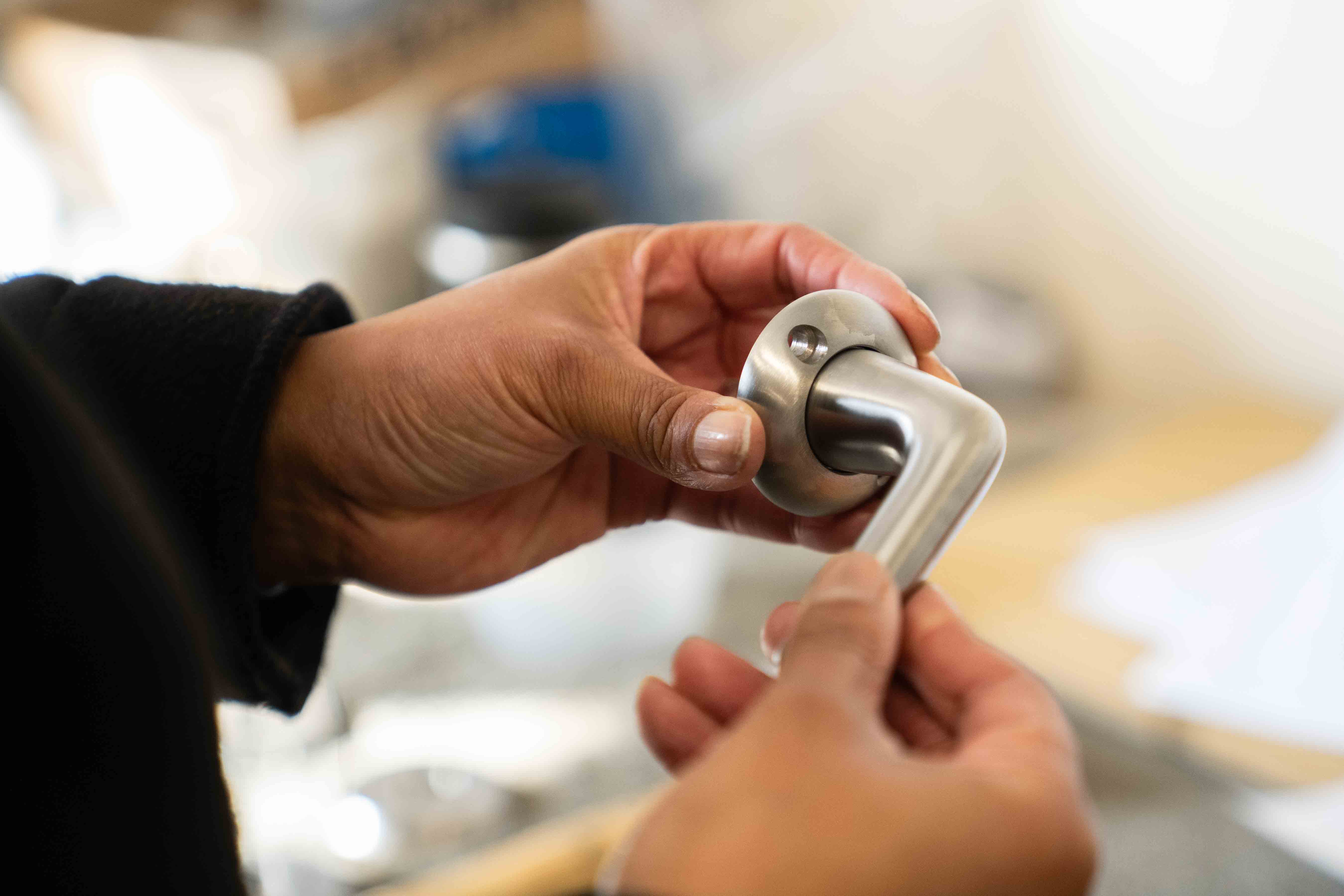
Lever door handles are straightforward products: normally a pair of levers, one on each side of the door, connected by a spindle. The important part is identifying exactly what every door needs before placing the order.
Step one: make a complete door list
Walk through the property room by room and record every door, including cupboards, utility rooms, garages and double-door sets.
| Door | What it usually needs |
|---|---|
| Living rooms, bedrooms and studies | A lever pair on a rose or backplate, operating a latch. |
| Bathrooms and en-suites | A lever pair with a bathroom turn and emergency release, or levers on a bathroom backplate. |
| Doors requiring a key | A lever pair with a sashlock and separate escutcheons, or levers on a lock backplate. |
| Cupboards and stores | Pull handles or fixed knobs where the door does not latch, or a lever pair where it does. |
| Fire doors | Handles, latches, hinges and other hardware suitable for the tested doorset. |
| Double doors | A working lever pair on the active leaf, with suitable bolts or other hardware on the second leaf. |
Record the door thickness, swing direction and whether existing locks or latches will be retained. Photographs help when discussing the schedule with an architectural ironmonger.
Lever handles on roses or backplates?
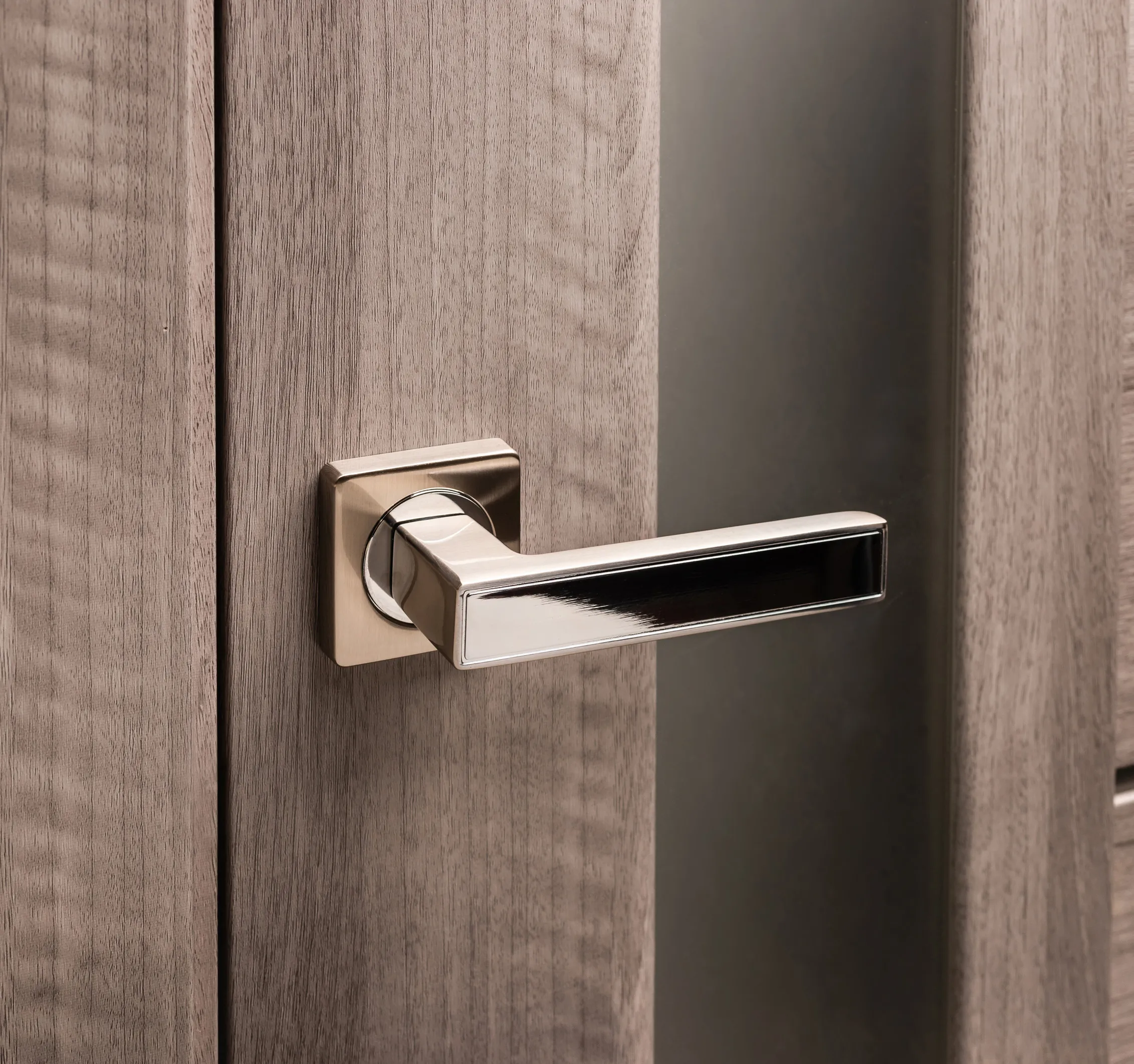
Levers on roses use a small round or square mounting plate. Key escutcheons and bathroom turns are installed separately, creating a clean and contemporary appearance.

Levers on backplates place the handle and locking function on one longer plate. They work particularly well in period properties and can cover marks or fixing holes left by older hardware.

Use the same format consistently throughout the house unless there is a practical reason to change it. The guide to lever handles on roses versus backplates explains the differences in more detail.
Plan bathroom and locking doors carefully
A standard lever pair operates only the latch. Bathrooms and doors requiring a key need additional hardware.
For a bathroom, choose either:
- Levers on roses with a separate bathroom turn and emergency release
- Levers on bathroom backplates incorporating the turn and release
For a door that needs a key or euro cylinder, choose compatible escutcheons or a suitable lock backplate. Confirm the type and position of the lock before ordering the handles.
Keeping bathroom turns, escutcheons and lever roses in the same finish and from the same range prevents small but noticeable differences in colour and size.
Do not overlook the fire doors
Many houses contain fire doors without the owners immediately recognising them. Examples can include the door between a house and an integral garage and, depending on the building design, doors opening onto a protected stairway.
The handle, latch, hinges, closer and other components installed on a fire-resisting door form part of the complete doorset specification. Hardware should not be substituted only because it fits the existing holes.
Identify fire doors before ordering and check that the selected components are suitable for the tested doorset. The guide to fire door ironmongery explains the principal checks.
Choose sprung levers for heavier handles
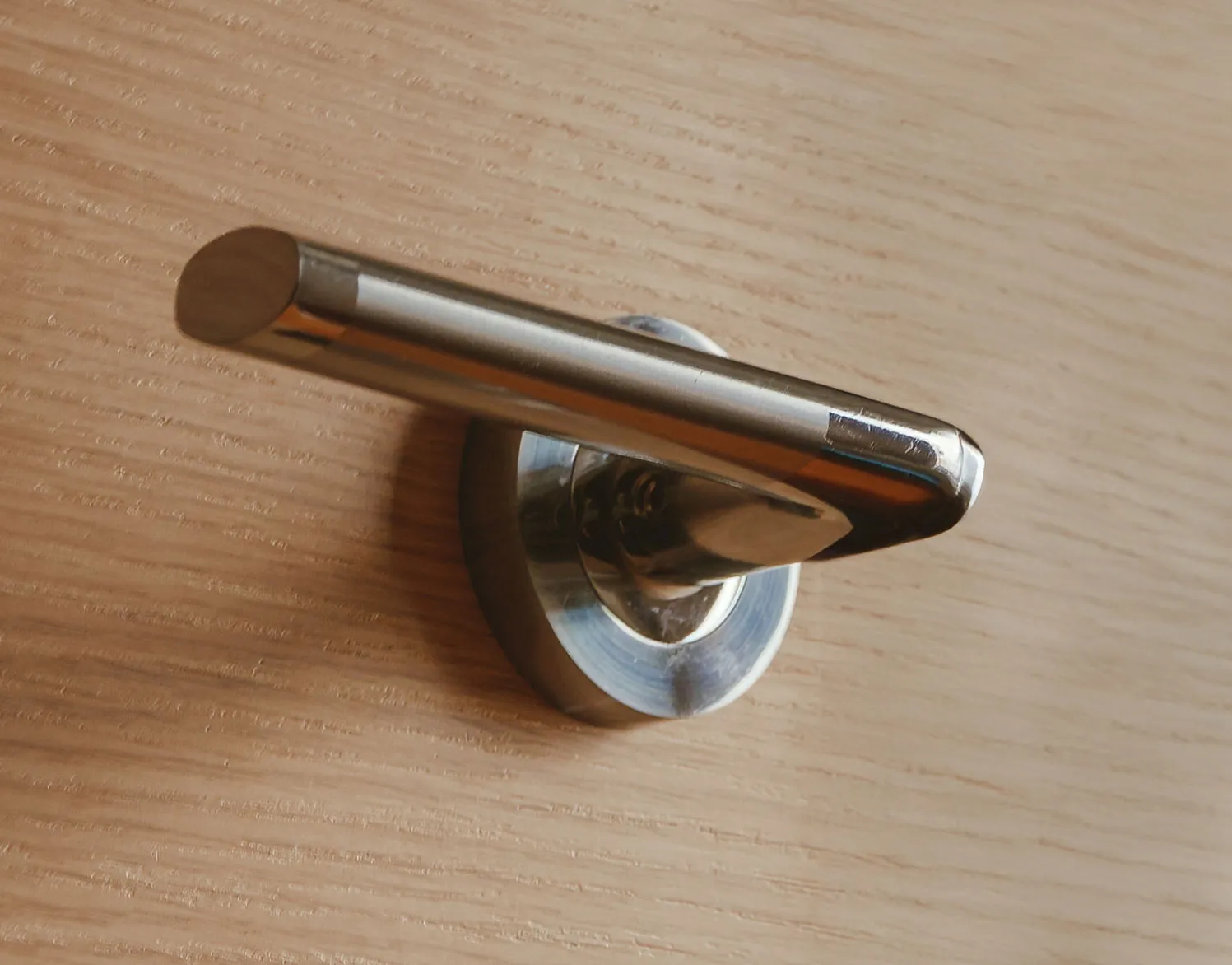
A lever needs spring assistance to return to the horizontal position after operation. Many latches contain a spring, but this may not provide enough support for a long or heavy lever.
Substantial solid-brass or bronze levers can begin to droop if they rely entirely on the latch spring. A sprung rose or backplate contains an additional return spring within the handle assembly.
Ask whether the selected lever is sprung and whether it is compatible with the proposed latch. The two mechanisms must work together without making the handle unnecessarily stiff.
Use one finish and, where possible, one manufacturer
Products described using the same finish name can still vary between manufacturers. Satin brass from one supplier may be lighter or more polished than satin brass from another. Roses, escutcheons and bathroom turns can also differ slightly in diameter and profile.
Ordering the levers, knobs, pull handles and accessories from one coordinated range helps maintain consistency throughout the renovation.
Dortrend lever handles share finishes with compatible knobs, pulls and accessories manufactured at its Worcester factory. Available options can be reviewed on the finishes page.
Count complete sets, not individual handles
A lever set normally contains a handle for both sides of one door. Count each latched door as one complete set unless the specification states otherwise.
For each door, record:
- The lever design and finish
- Rose or backplate format
- Latch, bathroom or locking function
- Door thickness
- Required latch or lock
- Whether the door is fire-resisting
- Any matching hinges, escutcheons, turns or door stops
Double doors and specialist doors may require different quantities or configurations, so list them separately rather than assuming they use two ordinary sets.
Order a spare set
Add at least one spare set to the main order, particularly where the finish is hand applied or the design is bespoke.
Doors can be added during a renovation, hardware may be damaged during building work and future repairs are easier when a matching spare is already available.
Store the spare with the product reference, finish description, fixing instructions and supplier details. This information will also help if further products are needed several years later.
Lever-handle renovation checklist
- List every door individually.
- Identify plain latch, bathroom, locking and fire-door functions.
- Choose roses or backplates.
- Confirm door thicknesses and existing lock or latch dimensions.
- Select sprung hardware where required for heavier levers.
- Use one coordinated finish throughout the property.
- Include matching escutcheons, turns, releases and accessories.
- Order at least one spare lever set.
Lever-handle planning FAQs
What does lever lever mean?
It means a pair of lever handles, with one lever on each side of the door, connected through the latch or lock by a spindle.
How many lever sets do I need?
You normally need one complete lever set for every latched door. Count every door separately, check double and specialist doors, and add at least one spare set.
Can I use the same handles on fire doors?
Only when the selected hardware is suitable for the tested doorset and its intended application. Confirm the requirements before ordering or substituting any component.
Should bathroom handles match the rest of the house?
Yes. A bathroom backplate or separate turn and emergency release in the same finish allows the bathroom doors to coordinate with the remaining lever sets.
Discuss your renovation schedule
Call Dortrend on 01299 827837 or contact the team with your door list for help assembling the correct lever sets and finding an architectural ironmonger.