What Makes a Designer Door Handle? A Buyer's Guide
A designer door handle is defined by more than its looks. The best are made from solid brass, bronze or stainless steel rather than plated zinc, feel heavy and smooth in the hand, and are finished by hand, often in living finishes that age with use. Considered proportions, good springing and details such as leather, wood or hammered textures complete the picture.
The word “designer” is used on everything from cheap imported levers to hand-made pieces costing many times more. From a photo, the two can look surprisingly similar. The difference shows up when you pick the handle up, when it has been on a busy door for five years, and when the finish starts to wear. This guide explains what to look for, written by the team that designs and makes the Charles Dean range in our Worcester factory.
Material: solid metal or plated zinc?
Many low-cost handles are die-cast from zinc alloy and given a thin plated finish to look like brass or nickel. They are light, and once the plating wears through on the grip, the grey base metal shows. Designer door handles are usually made from solid brass, bronze or stainless steel. Solid metal can be machined to sharper, cleaner detail, it takes a deeper polish, and when a finish eventually wears it reveals more of the same metal rather than something cheaper underneath.
If a product listing does not say what the handle is made from, ask. A reputable maker will tell you the base material and the finish separately.
Weight and feel
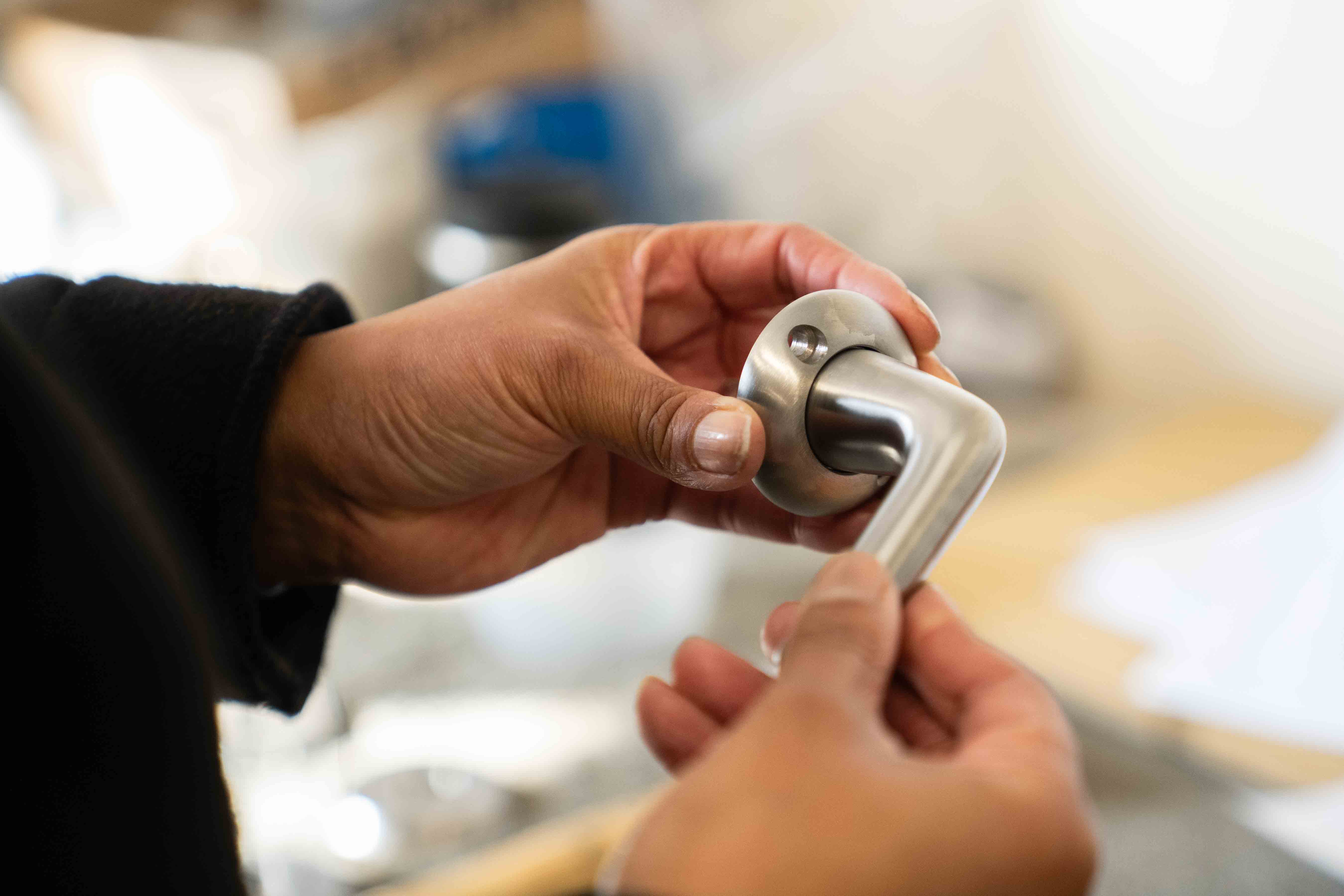
Pick up a well-made lever and you will notice the weight straight away. Weight is not everything, but it usually reflects how much solid metal has gone into the handle. Just as important is how it moves. A good lever returns cleanly to level, does not wobble on the rose and has no rough edges where your fingers rest. These are the things you notice every day, long after you have stopped noticing how the handle looks.
How the finish is applied
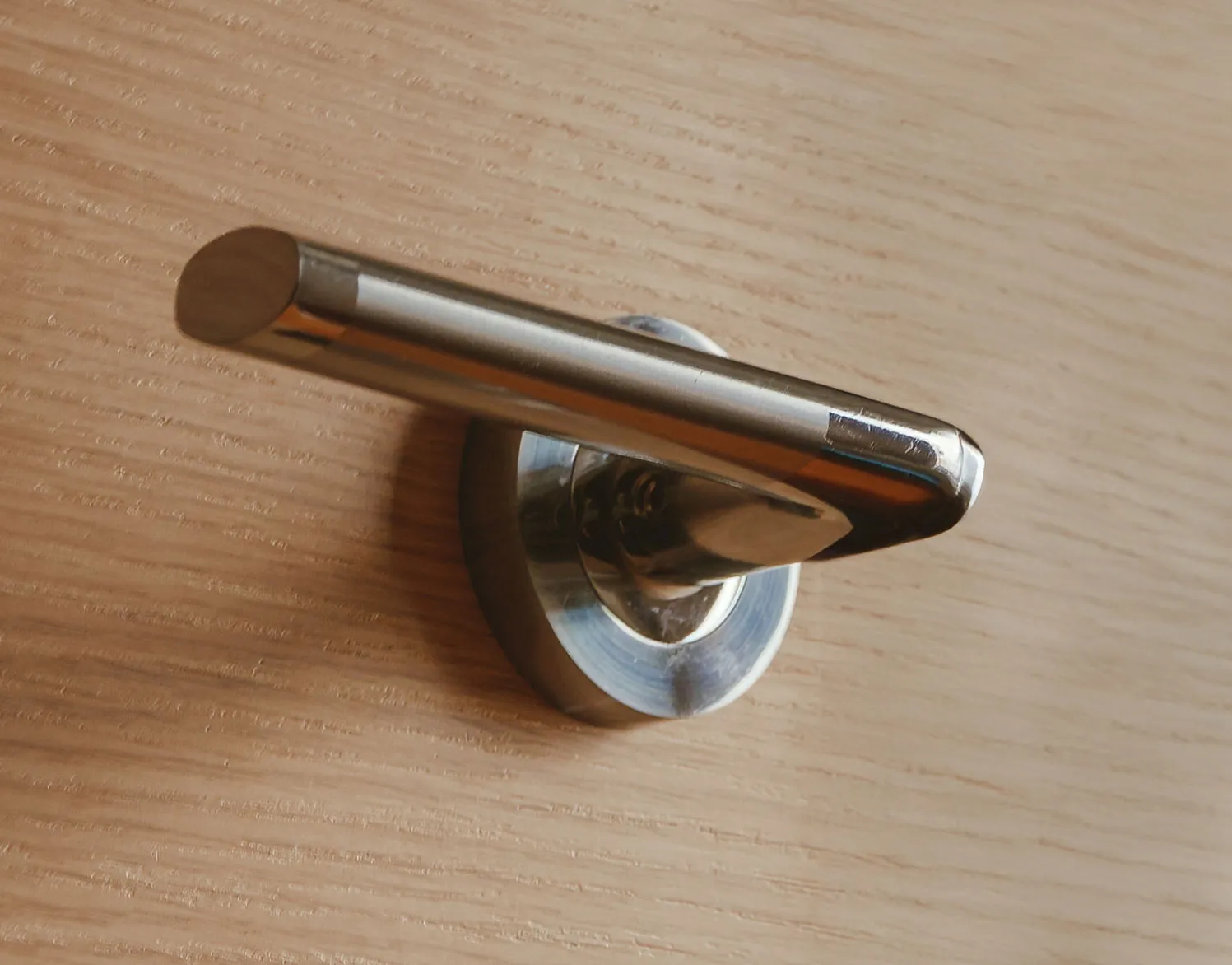
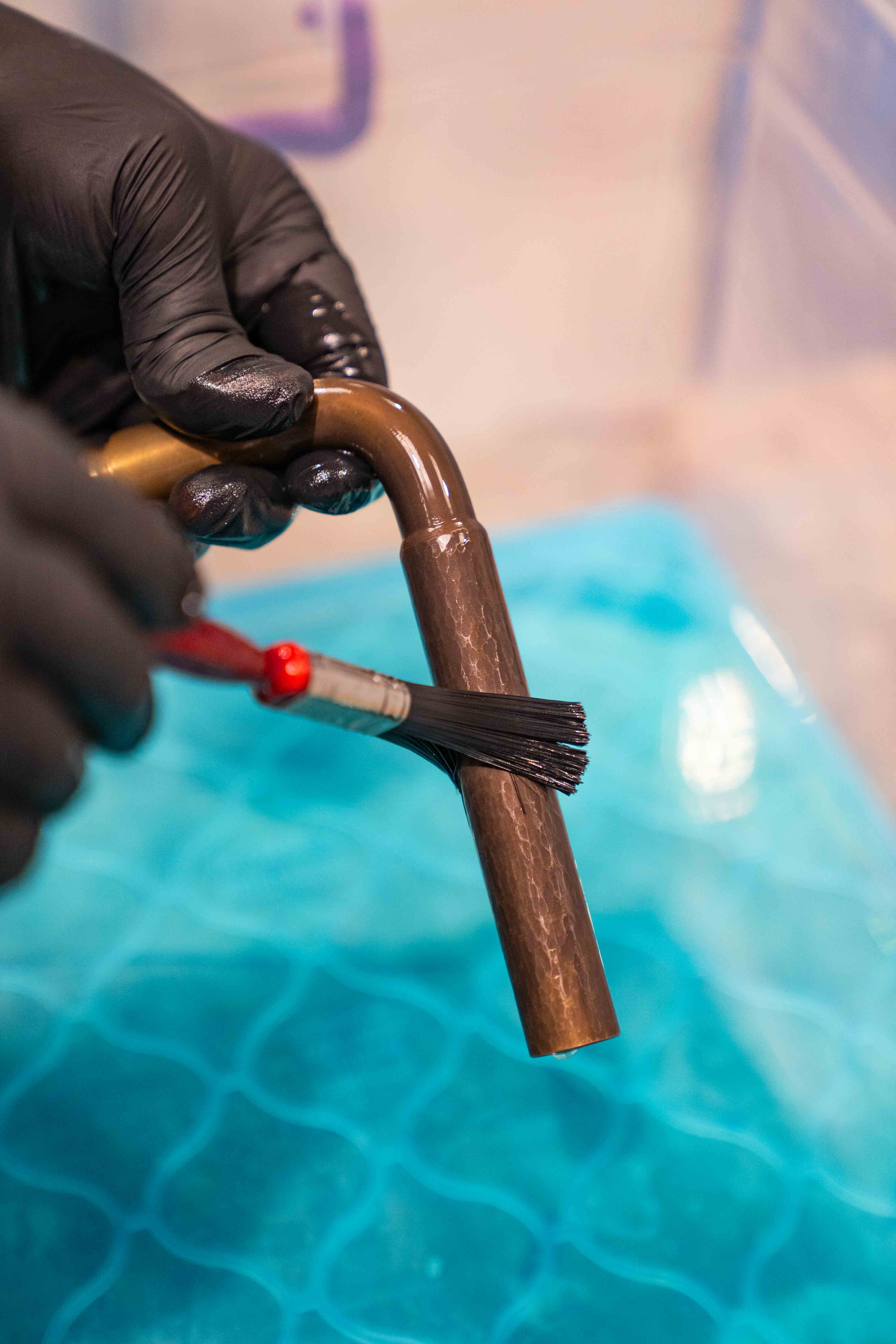
Finish is where designer door handles really earn their name. Mass-produced handles are usually plated and lacquered on a production line. Higher-end handles are often polished and finished by hand, and many use living finishes: unlacquered brass, bronze or copper protected with wax, which mellow and deepen with use and can be buffed back whenever you like.
Hand-applied patinas give antique and bronze finishes real depth, and PVD coatings offer colour that is very hard-wearing. You can compare every option on our door handle finishes page.
Proportion and detail
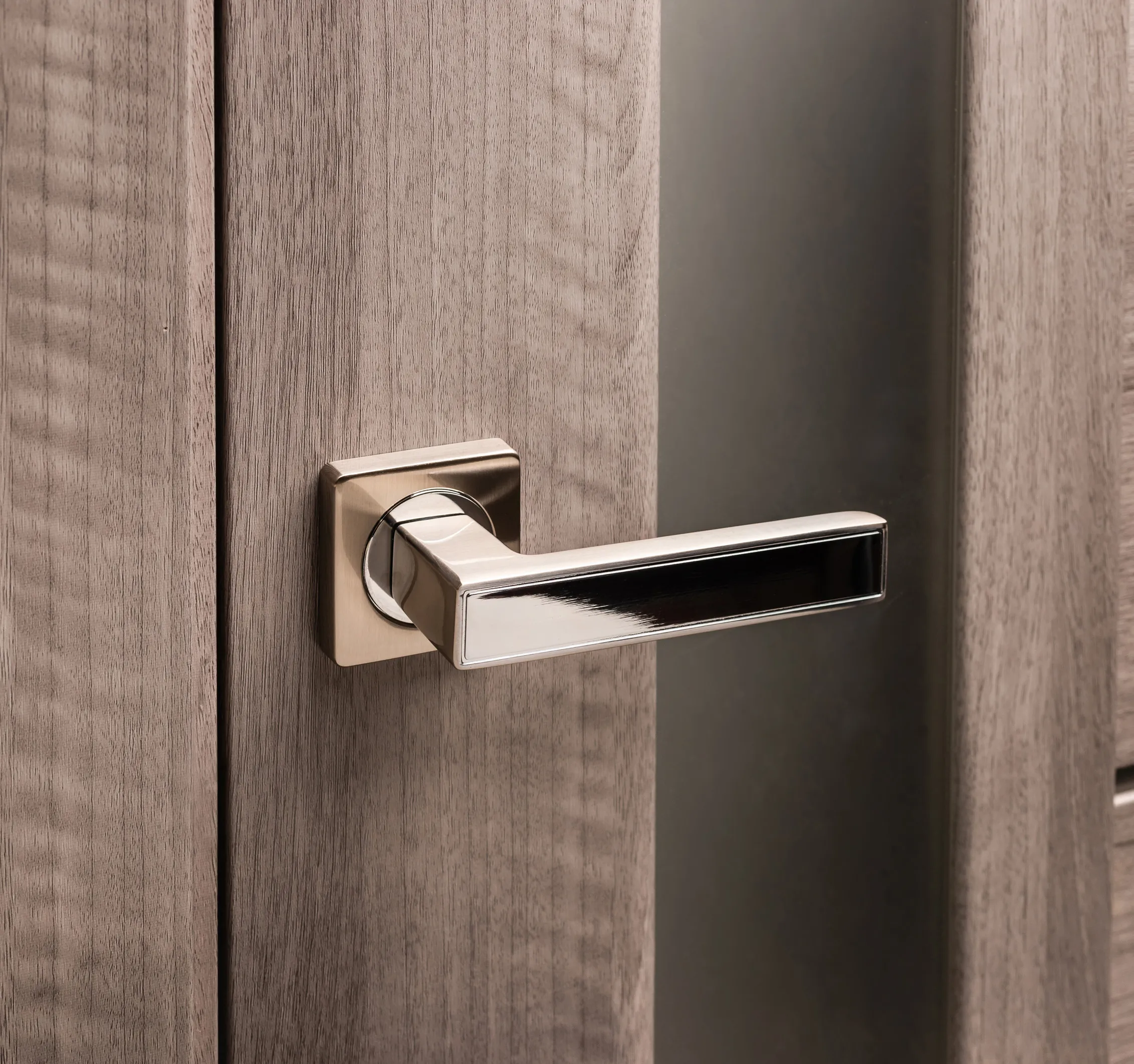
A designer handle is drawn with the door in mind. The length of the lever, the size of the rose and the shape of the grip should suit the height and weight of the door and the style of the building. Tall period doors look best with larger roses and longer levers, while compact cottage doors need something smaller. Good design also means the handle is comfortable to hold, with no sharp corners and enough clearance from the door frame.
Materials beyond metal
Some of the most distinctive designer door handles combine metal with other materials:
- Leather-wrapped grips, real or high-end synthetic, that are warm to the touch
- Wooden grips that soften a metal handle and suit natural interiors
- Real or effect stone and marble inlays
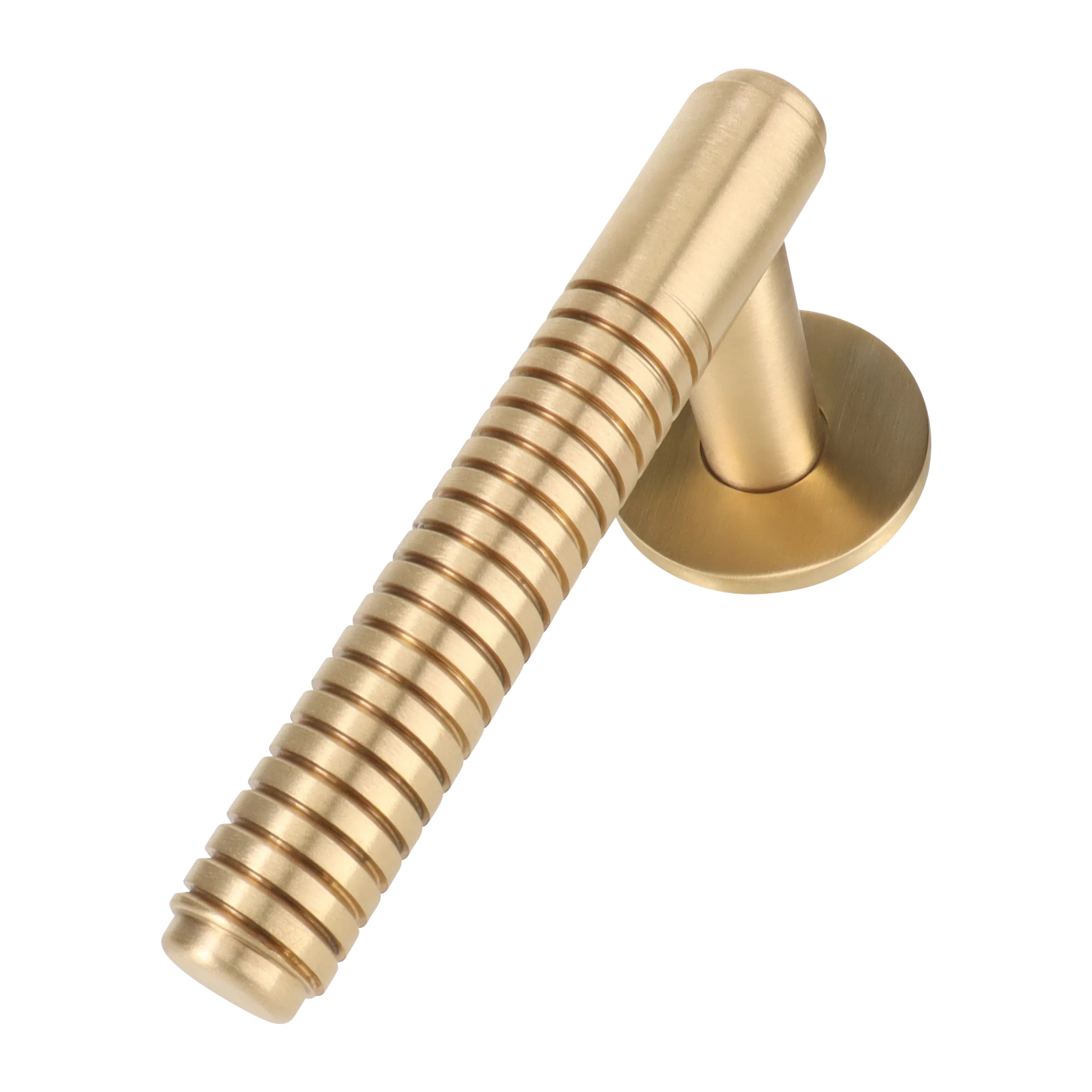
- Hand-hammered finishes, where each handle catches the light slightly differently
- Split finishes, with the grip, upstand and rose each finished differently
Where and how it is made
A lot of so-called designer hardware is drawn in one country and made in another. That is not always a problem, but it does make it harder to change a design, match a finish later or get a replacement years down the line. Handles made by the same company that designed them tend to be more consistent, and small changes, such as a longer lever or a different finish on the rose, are far easier.
At Dortrend, over 85% of our products are made in our own Worcester factory, which is why we are members of Made in Britain. Read more about British made door hardware.
A quick checklist for designer door handles
| Question to ask | Why it matters |
|---|---|
| What is the base material? | Solid brass, bronze or stainless steel lasts far longer than plated zinc. |
| How is the finish applied? | Hand finishing and living finishes age well; thin plating wears through. |
| Can it be lacquered or left living? | You choose whether the finish changes with use. |
| Is the lever sprung? | Good springing keeps the lever level and the door latch working. |
| Can finishes be matched across the house? | One maker means levers, pulls and knobs that actually match. |
| Where is it made? | Affects consistency, lead times and future replacements. |
Designer handles for a whole house
On a full residential project, it is worth choosing the hardware as a set rather than door by door. Most designers pick one lever style for the main internal doors, a matching pull or knob for cupboards and joinery, and something more substantial for the front door. Keeping one finish throughout ties the house together, and with a living finish each door develops its own character depending on how often it is used.
If nothing off the shelf is quite right, bespoke door handles can be designed to suit the property.
The Charles Dean range
Our Charles Dean collection is our range of designer door handles, made from solid materials and finished by hand in Worcester. It includes living brass, bronze and nickel finishes, leather, wood and stone details, and split finishes, with matching pulls, knobs and accessories for a whole project.
If you want to see how one type of handle compares with another, our guide to the types of door handle is a good place to start.
Designer door handles FAQs
Are designer door handles worth the extra cost?
For doors you use every day, usually yes. Solid materials, proper springing and a hand-applied finish mean the handle feels better and lasts far longer than a cheap alternative.
How can I tell if a door handle is solid brass?
Ask the maker for the base material. Solid brass handles feel noticeably heavier, and a reputable manufacturer will state the material and the finish separately.
What is a living finish?
A living finish is left unlacquered and usually protected with wax, so it changes naturally with use. It can be buffed back if you want to restore the original look.
Can designer handles be used on fire doors?
Some can, but it depends on the handle and the doorset. Read our guide to fire door ironmongery and check suitability before ordering.
Can I mix finishes on one handle?
Yes. Split finishes let the grip, upstand and rose be finished differently, for design effect or to meet colour contrast requirements.
Where can I buy Charles Dean door handles?
Dortrend supplies through architectural ironmongers. Contact us and we will put you in touch with a stockist.
Talk to us about your project
Call 01299 827837 or contact our team to request samples, discuss finishes or find your nearest stockist.