Types of Door Handles and Knobs Explained
The main types of door handle are lever handles - on a rose or on a backplate - door knobs, including mortice, rim, centre and cabinet knobs, and pull handles, which are fixed handles for doors without a latch and range from small cabinet pulls to long entrance handles. There are also flush pulls for sliding doors and specialist hardware such as anti-ligature handles for mental health settings.
Door hardware has its own vocabulary, and it is easy to order the wrong product when a supplier refers to a rose, rim knob, escutcheon or backset.
This guide explains the principal types of door handles and knobs, how they operate and where each type is normally used.
Door-handle types at a glance
| Handle type | Operates a latch? | Typical application |
|---|---|---|
| Lever on rose | Yes | Internal doors, offices and modern homes |
| Lever on backplate | Yes | Period properties, refurbishments and bathrooms |
| Mortice knob | Yes | Internal doors in homes and traditional interiors |
| Rim knob | Yes, with a rim lock | Cottages, period properties and traditional interiors |
| Centre door knob | No | Traditional front doors |
| Pull handle | No | Push-pull doors, entrances, cupboards and furniture |
| Flush pull | No | Sliding and pocket doors |
| Anti-ligature handle | Usually | Mental health and secure healthcare environments |
Lever door handles
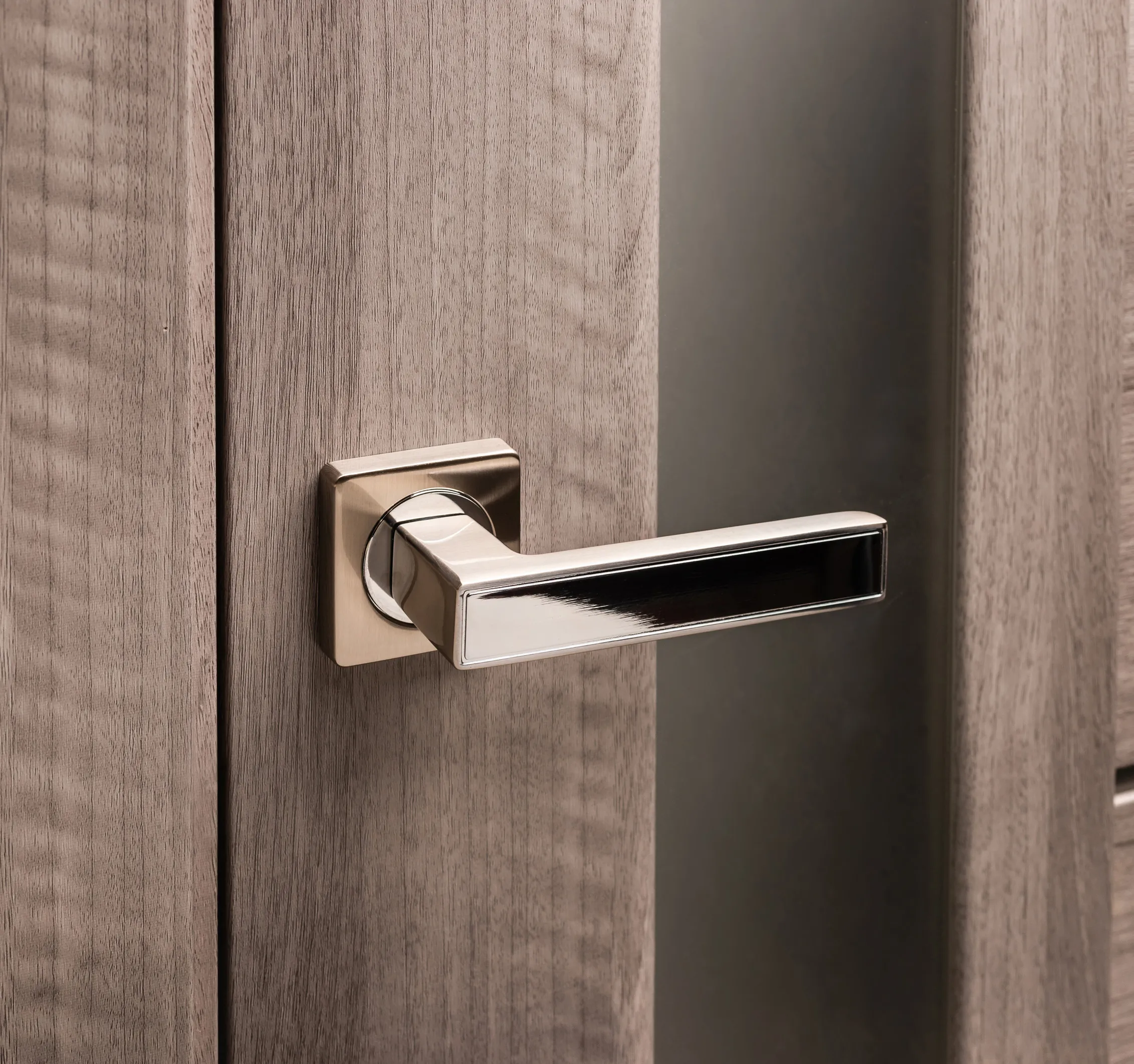
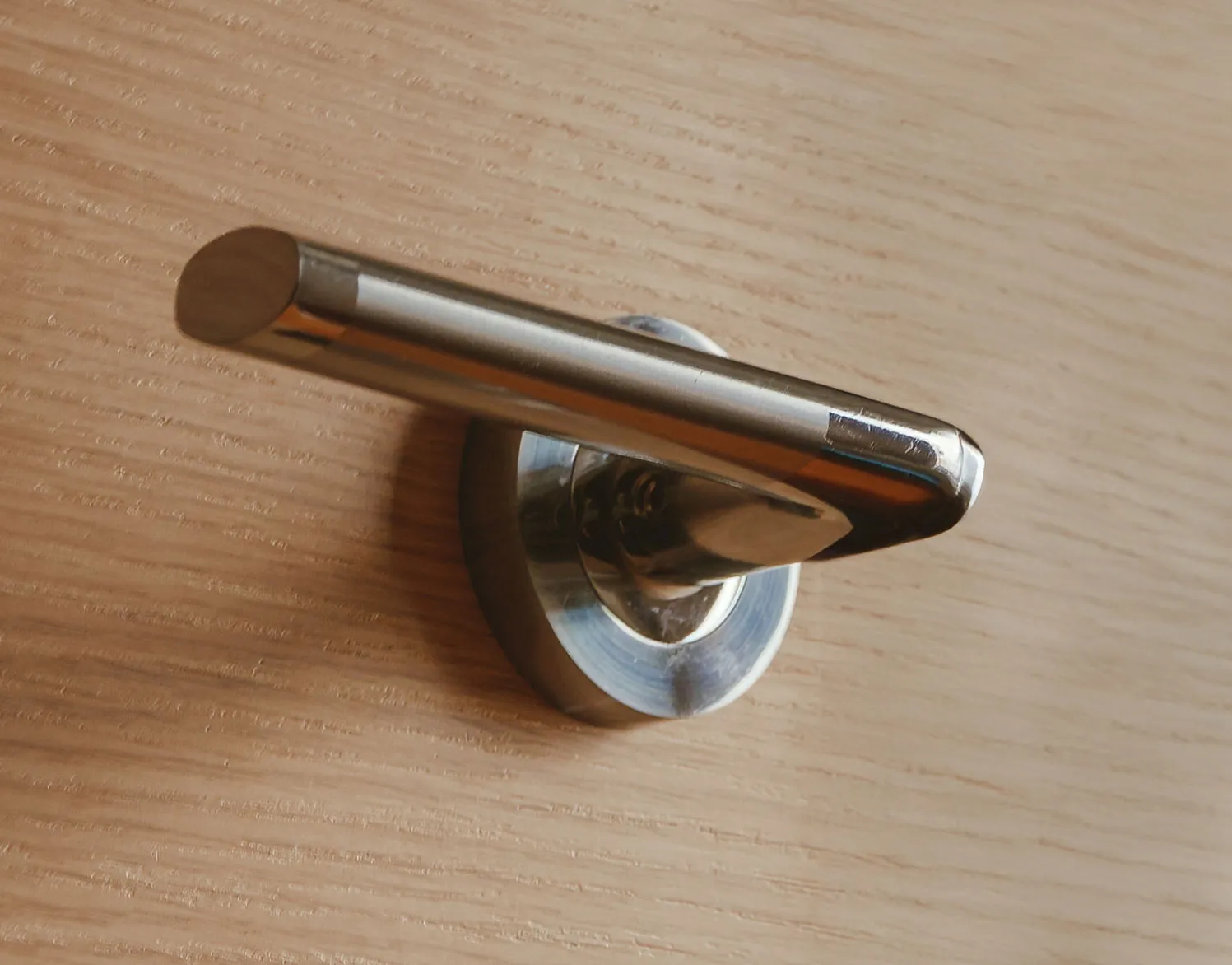
Lever handles are among the most common internal door handles used in the UK. A lever is fitted on each side of the door, and the two handles are connected by a square spindle passing through the latch.
Pushing the lever down rotates the spindle and retracts the latch. The shape makes a lever relatively easy to operate without a tight grip, which is one reason it is widely used in public, commercial and accessible environments.
Explore Dortrend’s range of lever door handles.
Lever on rose
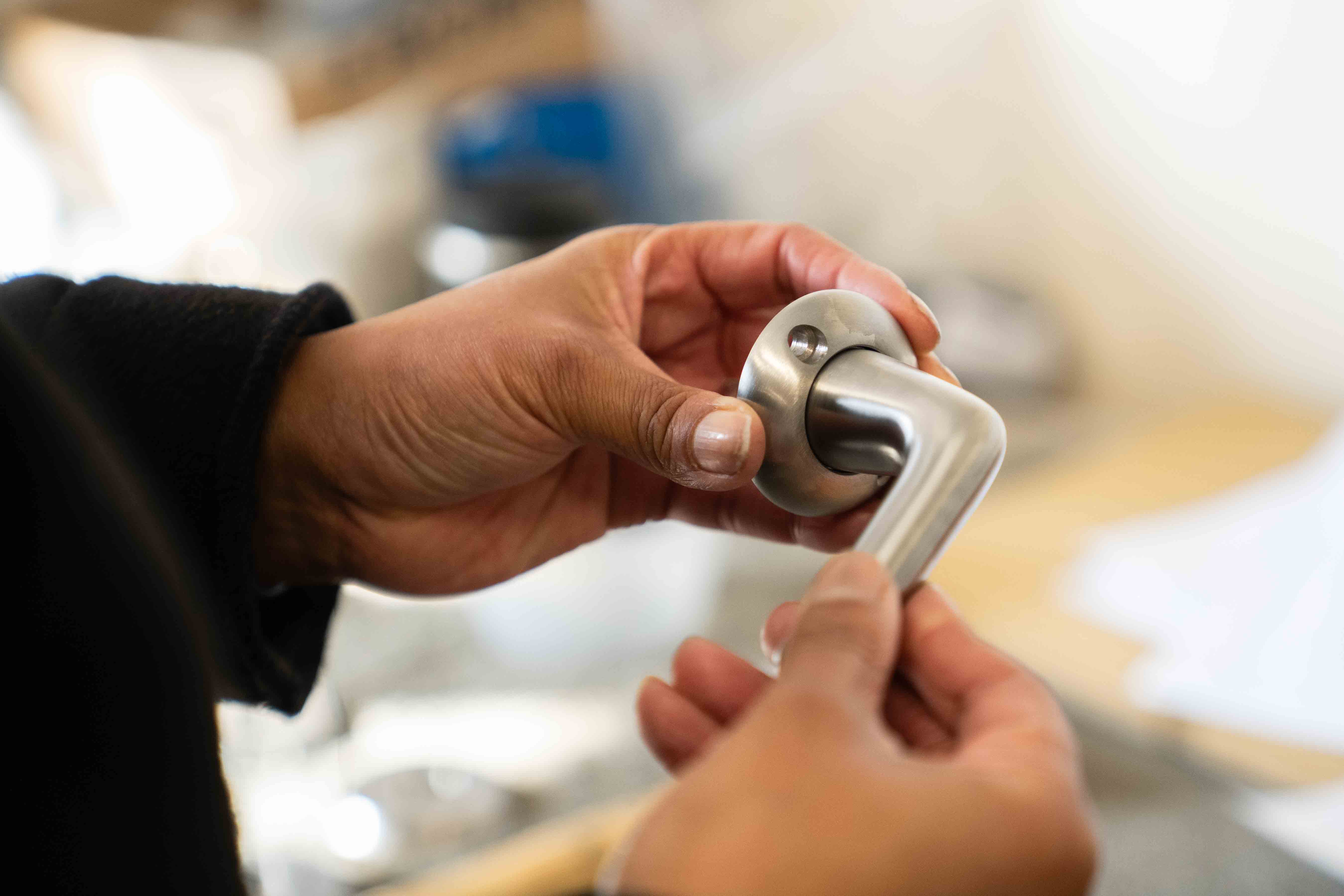
A lever on rose has a small round or square plate behind the handle. The rose conceals the spindle opening and fixings.
If the door needs a keyhole, euro cylinder or bathroom turn, this is fitted separately beneath the lever using an escutcheon or turn-and-release set. The separation gives the door a clean, contemporary appearance.

Lever on backplate
A lever on backplate is mounted on a longer plate. The plate may be plain or include a keyhole, bathroom turn, euro-cylinder opening or another locking function.
Backplates suit traditional interiors and refurbishment projects. Their larger surface area can also cover fixing holes or marks left by previously installed hardware.

For a more detailed comparison, read the guide to lever handles on a rose versus a backplate.
Door knobs
Door knobs are gripped and rotated rather than pushed down. They are strongly associated with period and traditional properties, although simple round and oval knobs also work in contemporary interiors.
A well-made knob feels solid in the hand and is less likely than a projecting lever to catch clothing in a narrow hallway. Knobs generally require more grip and wrist rotation than levers, so the people using the door should be considered before specifying them.
Browse Dortrend’s range of door knob handles.
Mortice knobs
Mortice knobs are installed as a pair and connected by a spindle. They operate a mortice latch or sashlock fitted inside a recess cut into the edge of the door.
This is the most common type of functioning door knob on internal residential doors. The knob can be mounted on a round, oval or square rose, or on a longer backplate.
Rim knobs
Rim knobs are designed to operate a rim lock: a box-shaped lock fitted to the face of the door instead of being recessed into its edge.
They often have a longer neck so that the user’s hand clears the rim-lock case. Rim knobs are commonly found in cottages, Victorian properties and other traditional interiors.
Centre door knobs
A centre door knob is a single fixed knob positioned in the centre of a front door. It does not normally operate the latch or lock.
It provides a handhold for pulling the door closed and creates a strong decorative focal point, particularly on Georgian, Victorian and other period-style entrance doors.
Cabinet knobs
Cabinet knobs are smaller fixed knobs used on cupboards, wardrobes, drawers and kitchen units. They are usually secured with a single fixing from the back of the cabinet door or drawer front.
Choosing cabinet knobs in the same material and finish as the main door hardware allows doors and joinery to form one coordinated scheme.
Pull handles
Pull handles are fixed handles that do not rotate or operate a latch. They are used on doors that open with a simple pushing or pulling action, including doors held shut by a closer or other control mechanism.
Pull handles range from small furniture pulls to long entrance handles extending across much of a door’s height. On a single-action door, a pull handle on one face is often paired with a push plate on the other.
They can be installed back to back, bolted through the door or face fixed, depending on the door material and whether a handle is required on both sides.

Explore Dortrend’s range of pull handles.
Flush pulls
A flush pull is recessed into the surface of a door so that little or none of the hardware projects beyond the door face.
Flush pulls are most commonly used on sliding doors and pocket doors. Their recessed form allows the door to move past another door, wall or frame without a projecting handle causing an obstruction.
They may be circular, rectangular or formed as an elongated finger pull. Some sliding-door arrangements also use an edge pull to retrieve a door that has moved completely into a wall pocket.
Specialist door handles
Anti-ligature handles
Anti-ligature handles use sloping, curved or specially controlled forms intended to reduce the possibility of cords, belts or fabric being secured around them. They are used in mental health and secure healthcare environments following a project-specific risk assessment.
Explore Dortrend’s anti-ligature door handles.
Anti-microbial handles
An anti-microbial handle is a lever, knob or pull handle treated with an anti-microbial surface or coating. Dortrend’s TouchClean® coating can be applied to suitable hardware for healthcare, education and other frequently used environments.
Designer handles
Designer handles place greater emphasis on proportion, surface detail, material and hand finishing. They may incorporate knurling, hammered textures, leather, wood, stone or contrasting metals.
See Dortrend’s range of designer door handles.
Bespoke handles
Bespoke handles are manufactured or adapted for a particular project. Dimensions, fixing centres, profiles, materials, finishes, engraving and branding can be developed to suit the doors and architectural design.
Door-hardware terms explained
| Term | Meaning |
|---|---|
| Rose | The small round or square plate positioned behind a lever or knob. |
| Backplate | A longer plate behind the handle, which may include a keyhole or locking function. |
| Escutcheon | A small cover plate fitted around a keyhole or cylinder. |
| Spindle | The square metal bar connecting a pair of handles through the latch or lock. |
| Backset | The distance from the edge of the door to the centre of the spindle or keyhole. |
| Sprung lever | A lever containing its own spring mechanism to help it return to the horizontal position. |
| Living finish | An unlacquered finish designed to change and develop a natural patina through handling and age. |
Choosing door handles for different sectors
Different buildings place different demands on their door hardware:
- Hospitals and care homes: easy-clean finishes, intuitive operation, durability and optional anti-microbial coatings.
- Mental health facilities: anti-ligature designs in areas identified by the project’s risk assessment.
- Schools: robust levers and pull handles capable of withstanding frequent and sometimes severe use.
- Offices: durable hardware that coordinates with the interior and performs reliably on frequently used doors.
- Hotels and high-end homes: distinctive materials, hand-applied finishes and designer details.
- Period properties: mortice knobs, rim knobs and lever handles on traditional backplates.
The basic handle types remain the same. What changes is the product specification, finish, fixing method and expected intensity of use.
How to choose the right handle
- Decide whether the door needs a latch. If it does not, a fixed pull handle or flush pull may be appropriate.
- Consider the people using it. Lever handles are generally easier to operate without a tight grip.
- Check the door and lock. Confirm the door thickness, lock type, latch backset and spindle dimensions.
- Review the complete doorset. Fire, escape, accessibility, security and specialist safety requirements may affect the choice.
- Select an appropriate duty level. A hospital corridor door needs more durable hardware than a rarely used private room.
- Coordinate the finish. Use related finishes across levers, knobs, pulls, locks and cabinet hardware.
If you are deciding between the two most common options, read the room-by-room guide to door knobs versus lever handles.
Made in Worcester since 1972
Dortrend has manufactured door hardware in Worcester since 1972, with more than 85% of its products now made in-house.
Knobs, levers, pull handles and associated accessories can be supplied in coordinated finishes, allowing different types of hardware to match across a home or commercial building.
Door-handle types FAQs
What is the most common type of door handle in the UK?
The lever handle is one of the most common choices for internal doors. It is normally fitted as a pair on either small roses or longer backplates.
What is the difference between a mortice knob and a rim knob?
A mortice knob operates a latch or lock recessed into the edge of the door. A rim knob operates a box-shaped rim lock fixed to the face of the door.
What is a centre door knob?
It is a fixed knob fitted near the centre of a front door. It is used to pull the door closed and normally does not operate the latch.
When should I use a pull handle?
Pull handles are suitable for doors that do not need a handle-operated latch, including push-pull doors, entrances, cupboards and furniture.
Can I mix knobs, levers and pull handles?
Yes. Different handle types can be used where each is most appropriate. Specifying one coordinated material or finish helps maintain a consistent appearance.
Can I buy directly from Dortrend?
Dortrend supplies through architectural ironmongers. Products can be added to a quotation through the website, or the team can help connect you with a suitable stockist.
Need help choosing?
Call Dortrend on 01299 827837 or contact the team with your door schedule or project details for help choosing the appropriate handles and finishes.