Door Knobs vs Lever Handles: Which Should You Choose?
Door knobs suit period and traditional homes, are less likely to catch clothing in narrow spaces and are harder for small children and pets to open. Lever handles are easier to use for people with limited grip or strength, which is why accessibility guidance favours them in public and commercial buildings. Many homes use both, in a matching finish.
It is one of the questions we are asked most often. There is no single correct answer because the best choice depends on the building, the people using it and the appearance you want to achieve.
Below, we compare door knob handles and lever door handles point by point, before suggesting which option works best for different rooms and buildings.
The main differences
| Consideration | Door knobs | Lever handles |
|---|---|---|
| How they work | Grip and twist | Push down |
| Ease of use | Requires a reasonably firm grip | Can be operated with limited grip or a closed hand |
| Accessibility | Not generally recommended where accessibility is important | Favoured by accessibility guidance |
| Style | Traditional, period and characterful | Available in both modern and traditional designs |
| Catching clothing | Unlikely | Lever ends can catch sleeves and bags |
| Children and pets | Harder for them to open | Easier for them to open |
| Space required | Needs sufficient knuckle clearance from the frame | Needs clearance for the lever to rotate |
| Typical use | Homes, period buildings and cupboards | Public buildings, offices and most homes |
Accessibility
This is the largest practical difference between knobs and levers.
A door knob must be gripped and turned. This can be difficult for older people, anyone with arthritis or reduced hand strength, and someone carrying shopping or a child.
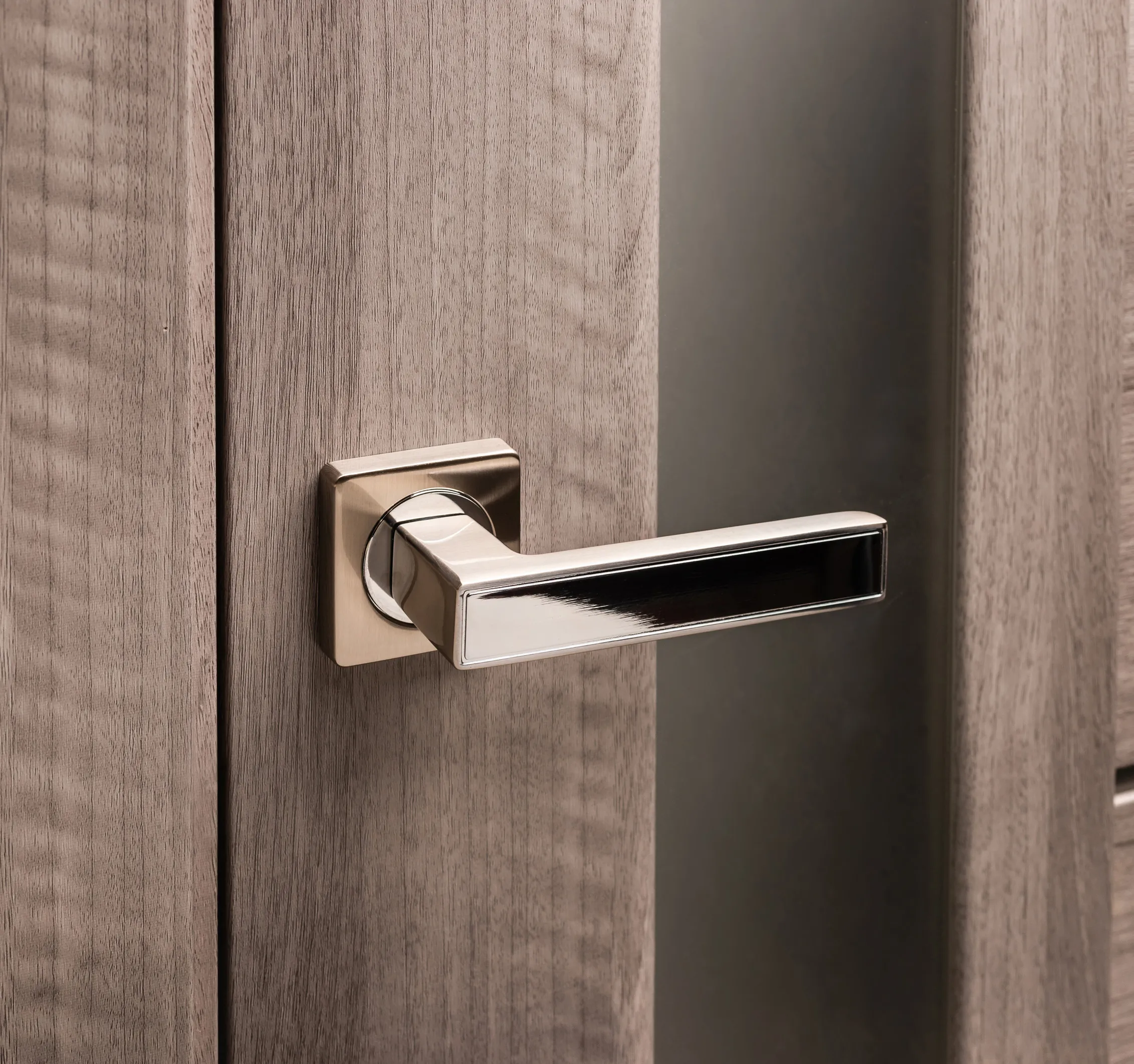
A lever can be pushed down using a closed hand, wrist or elbow. This is why accessibility guidance for buildings, including BS 8300 and Approved Document M, generally favours lever handles. It is also why levers are normally used in public and commercial buildings.
In a private home, the choice is yours. However, if someone in the household finds knobs difficult to operate, or you are planning for later life, lever handles are the safer choice for frequently used doors.
Style and period character
Door knobs have been part of British homes for centuries. In many Georgian, Victorian and Edwardian properties, they form part of the building’s architectural character. Removing them can make a room feel unexpectedly modern.
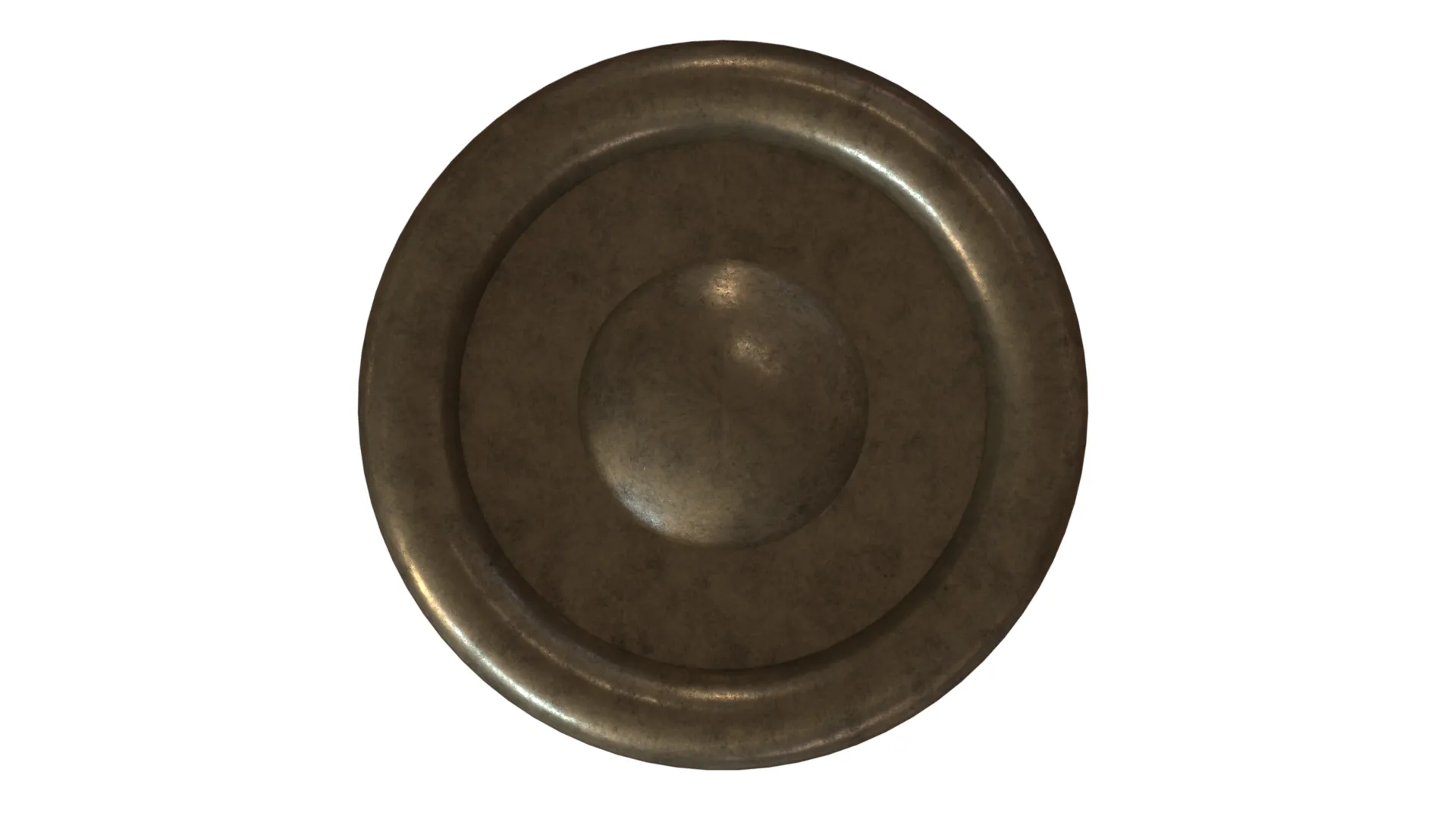
A substantial brass knob turning smoothly on a panelled door is difficult to beat. Lever handles also have a long history and can work well in period properties, particularly when mounted on traditional backplates.
In contemporary interiors, slim lever handles on roses are more common, although a simple modern knob can look effective on a plain flush door.
Safety, children and pets
Knobs are more difficult for young children and pets to open. Some households find this useful on doors leading to stairways, utility rooms or studies. Dogs, in particular, can quickly learn to open lever handles.
However, a lever is generally faster and easier for someone to operate in an emergency.
Knobs are also less likely to catch clothing, bags or equipment in narrow hallways. This is one reason compact knobs are often chosen for cupboards and storage areas.
Cleaning and maintenance
Both types are easy to maintain. For most finishes, wiping the hardware with a soft, damp cloth is sufficient. Abrasive cleaners should be avoided because they can damage the surface.
Lever handles have more individual surfaces to clean, while knobs tend to collect fingerprints around their complete circumference. On frequently used doors, check the fixings occasionally to ensure nothing has worked loose.
Types of door knob
- Mortice knobs: fitted as a pair and connected by a spindle, operating a mortice latch or sashlock set into the edge of the door.
- Rim knobs: used with a box-shaped rim lock fixed to the face of the door, commonly found in cottages and period interiors.
- Centre door knobs: fixed in the centre of a front door and used to pull it closed rather than operate the latch.
- Cabinet knobs: smaller knobs used on cupboards, wardrobes and kitchen furniture.
Types of lever handle
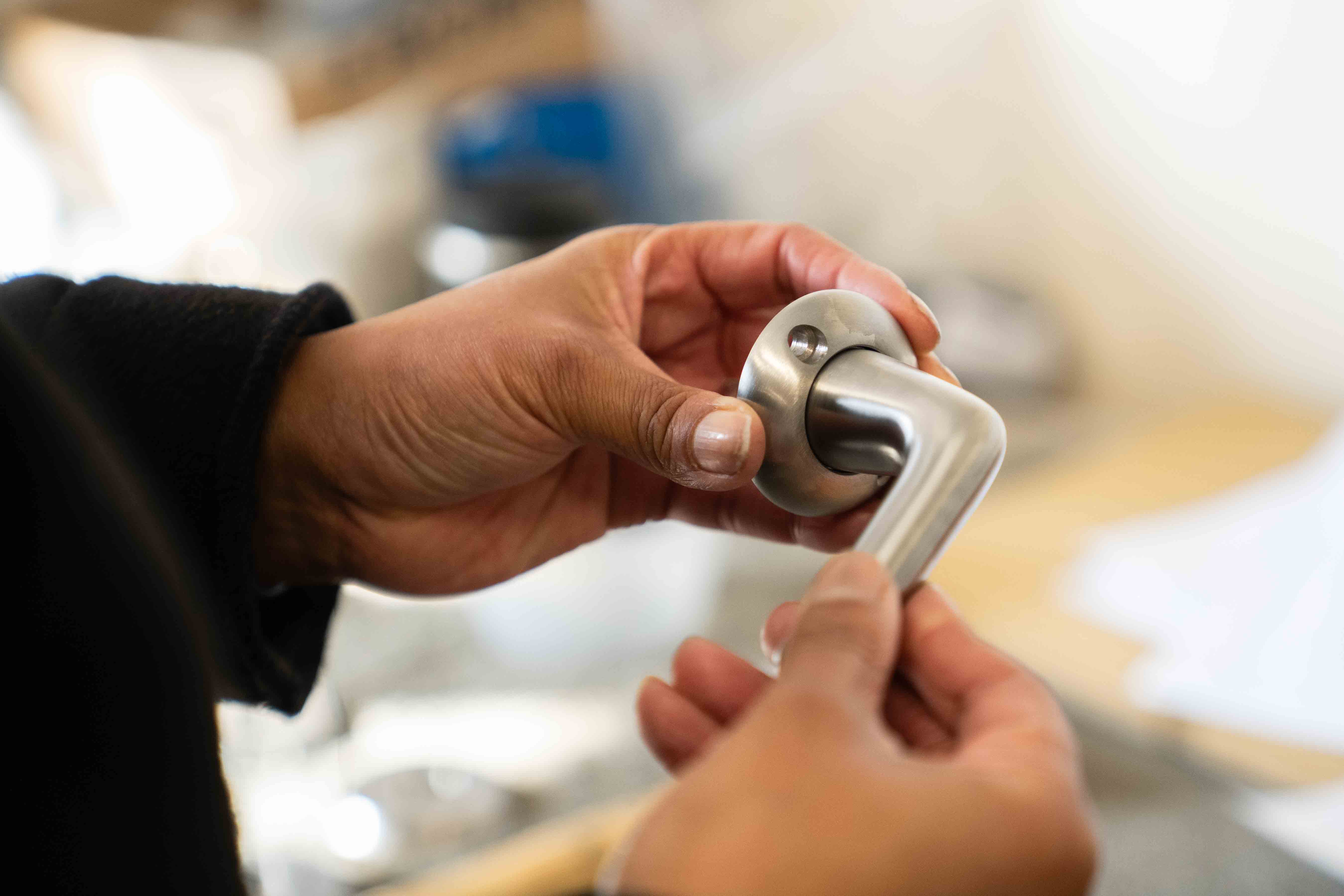
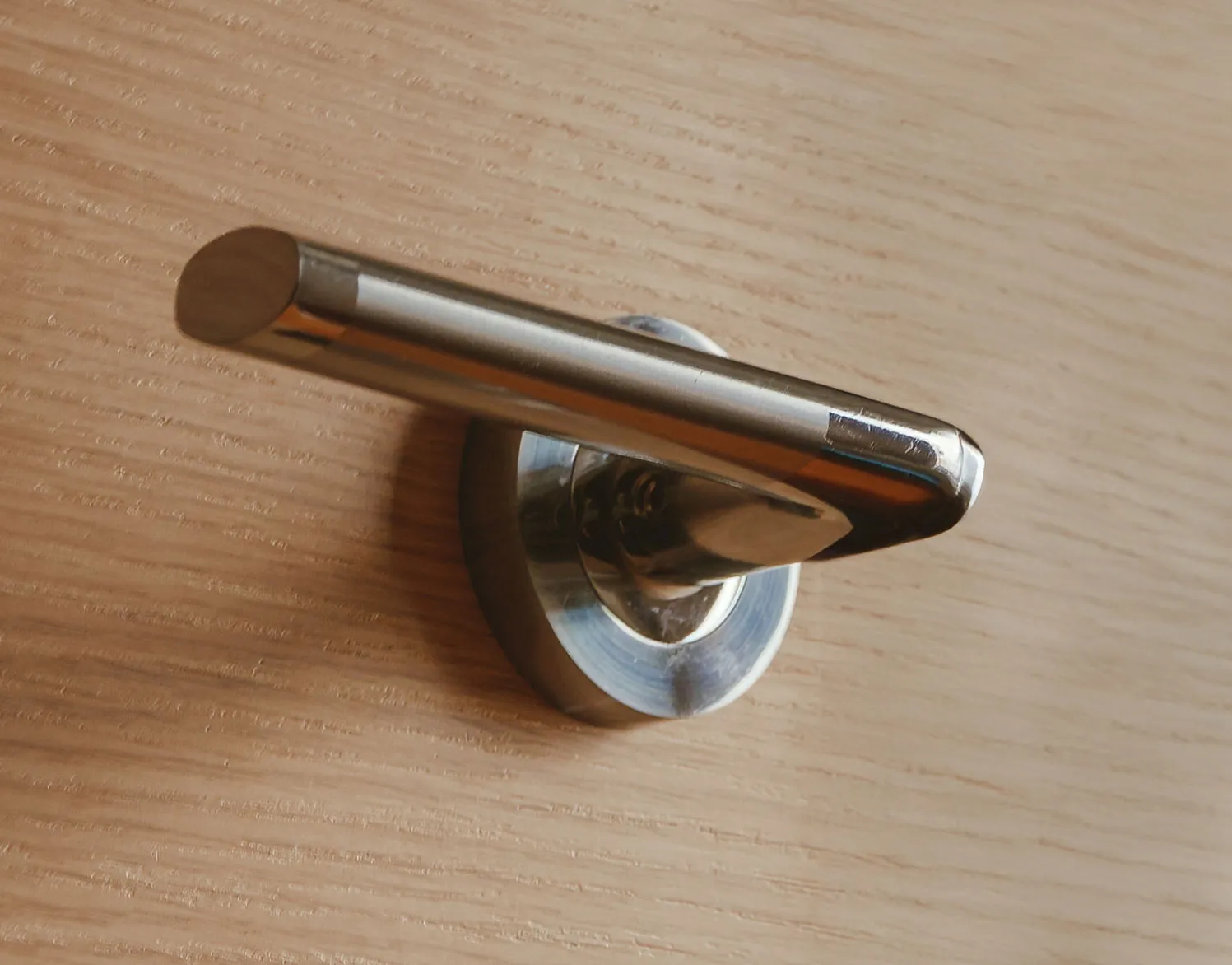
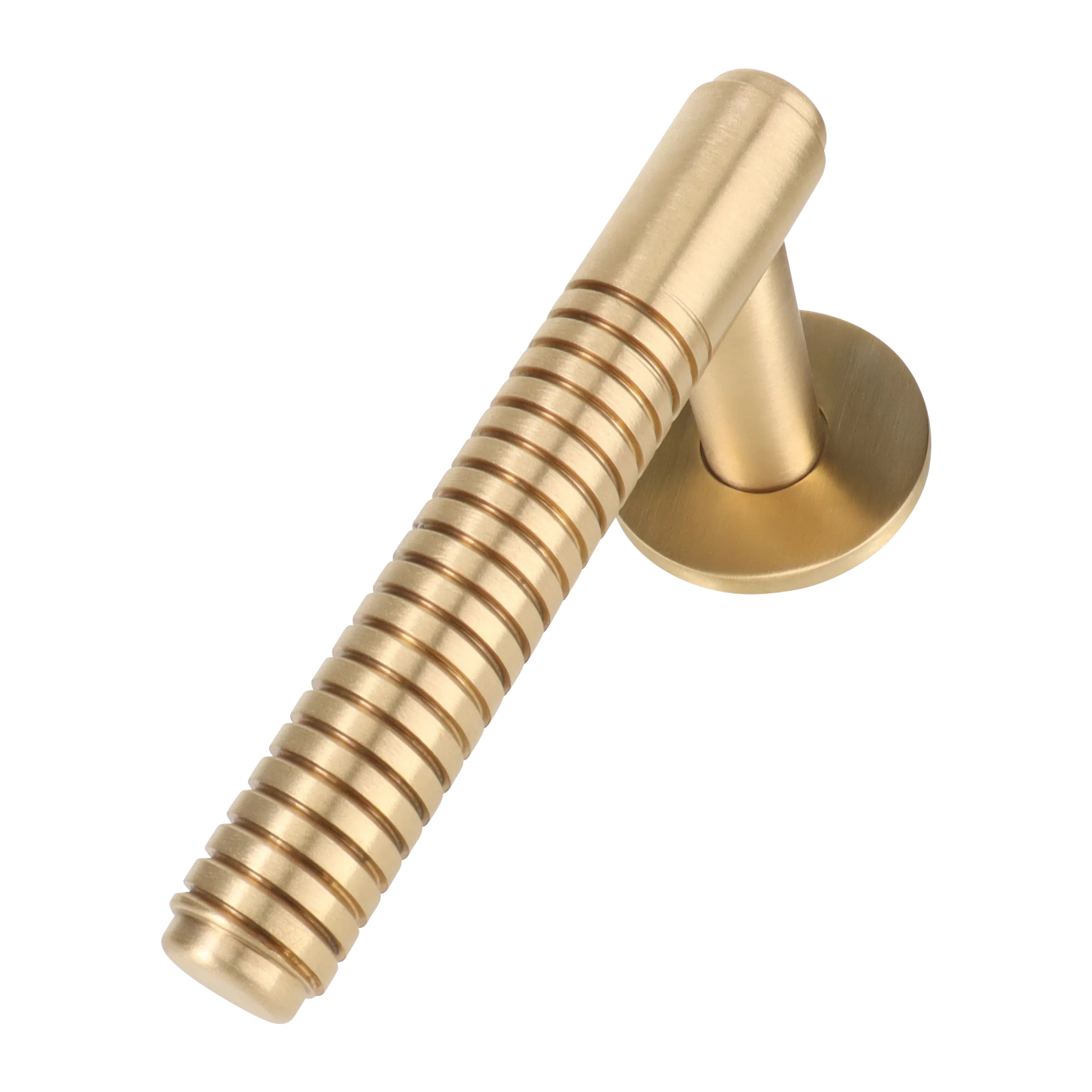
Lever handles can be mounted on a small rose, with any keyhole or bathroom turn fitted separately. Alternatively, they can be mounted on a longer backplate that incorporates the keyhole, cylinder opening or bathroom turn.
Our guide to lever handles on roses versus backplates explains the difference.
Practical checks before choosing
- Backset: knobs need sufficient distance between the door edge and spindle so that knuckles do not strike the frame. A latch suitable for a lever may feel too close to the frame when used with a knob.
- Latch type: mortice knobs work with mortice latches, while rim knobs require a rim lock.
- Door thickness: unusually thick doors may require a longer spindle and fixings.
- Fire doors: any knob or lever fitted to a fire door must be suitable for the tested doorset.
- Size: larger knobs can suit tall, substantial doors, while smaller knobs work well on cottage doors and cupboards.
Which should you use room by room?
| Room or door | Usually best | Why |
|---|---|---|
| Centre of a front door | Centre door knob | Pulls the door closed and complements traditional entrances |
| Living rooms and bedrooms | Either | The decision depends on style and who uses the room |
| Bathroom | Lever with a bathroom turn | Easier to operate quickly or in an emergency |
| Kitchen | Lever | Easier to operate with full or wet hands |
| Cupboards and stores | Knob | Compact and less likely to catch clothing |
| Offices and public buildings | Lever | Accessibility guidance generally favours levers |
Can you mix knobs and levers?
Yes. Many homes use both.
A common approach is to use levers on the busiest doors, such as kitchens and bathrooms, and knobs on living rooms, bedrooms and cupboards.
Choosing the same finish throughout keeps the interior visually consistent. This is easiest when the knobs and levers come from the same manufacturer. Dortrend’s knobs and levers share the same finishes, allowing them to be combined across a property.
Cost and quality
Price depends more on the material and finish than on whether you select a knob or lever.
A solid brass knob that is machined and polished by hand will cost more than a plated zinc lever, but it should also last considerably longer and develop more character with use.
Whichever type you choose, check the base material, the finish and how securely it fixes to the door. A well-made knob or lever should feel solid, operate smoothly and remain secure for many years with minimal maintenance.
Choosing hardware for period homes
In older buildings, matching the original hardware is important. If existing knobs are worn, damaged or missing, they can sometimes be reproduced to match the surviving fittings.
Our guide to recreating period door hardware explains the process.
You can also browse our door knob handles, lever door handles and complete range of door knobs and handles.
Door knobs versus lever handles FAQs
Are door knobs or lever handles more secure?
Neither is more secure on its own. The security of the door comes primarily from the lock rather than the handle used to operate it.
Are door knobs accessible?
Knobs require a reasonably firm grip and twisting action, so they are not generally recommended where accessibility is important. Lever handles are normally the better choice in public buildings.
Can I replace door knobs with lever handles?
Usually, yes. However, you should check the latch, backset and existing fixing holes. A lever on a backplate may help cover marks left by the knob’s rose.
What is the difference between a mortice knob and a rim knob?
A mortice knob operates a latch or lock set into the edge of the door. A rim knob operates a box-shaped rim lock fixed to the face of the door.
Can knobs be fitted to fire doors?
Only when the knob furniture is suitable for the tested doorset. Confirm the specification with your architectural ironmonger before ordering.
Does Dortrend make matching knobs and lever handles?
Yes. Dortrend knobs and levers are available in coordinated finishes so they can be matched throughout a home or commercial building.
Need help choosing?
Call 01299 827837 or contact the Dortrend team with photographs and details of your doors, and we will help you select the right knobs or lever handles.